Introduction to Psilocybin and Mental Health
Hallucinogenic mushrooms, commonly termed magic mushrooms, synthesize indole alkaloids—primarily psilocybin and its active metabolite psilocin. These compounds exert profound serotonergic agonism, predominantly at 5-HT2A receptors, modulating cortical networks and inducing altered states of consciousness.
Contemporary clinical research, conducted by prestigious institutions like Johns Hopkins Medicine and Imperial College London, is examining psilocybin-assisted psychotherapy for refractory psychiatric conditions. This guide synthesizes pharmacological mechanisms, therapeutic outcomes, and how standardized mycological research tools, such as the MycoBag cultivation systems, are providing researchers with consistent, high-quality specimens for observation.
Mental Health Breakthroughs: Depression and Anxiety
Psilocybin-assisted therapy has demonstrated rapid, sustained antidepressant effects, particularly in cases of Treatment-Resistant Depression (TRD). According to studies published in the National Center for Biotechnology Information (NCBI), psilocybin disrupts the rigid Default Mode Network (DMN) connectivity patterns characteristic of major depressive disorder, fostering cognitive flexibility.
In addition to depression, research indicates significant reductions in anxiety related to life-threatening illnesses, with rapid drops in HAM-A anxiety scores. The therapeutic mechanism involves a “reset” of the DMN, amygdala downregulation, and enhanced emotional processing, often yielding results after just a single controlled administration alongside psychotherapy.
The Importance of Elite Genetics in Mycological Research
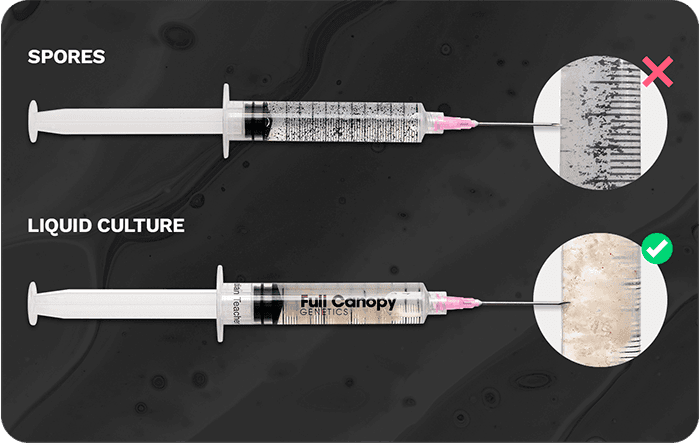
For research to be valid, alkaloid consistency is paramount. The extreme variance found in wild mushrooms makes standardized study difficult. This is where elite genetics play a crucial role. All MycoBag varieties originate from the renowned laboratory of Full Canopy Genetics in Lakewood, Colorado[cite: 39].
Through strict genetic “training” in controlled environments, these strains offer exceptional vigor and highly stable chemical profiles ideal for qualitative analysis[cite: 41, 47]. Key research strains include:
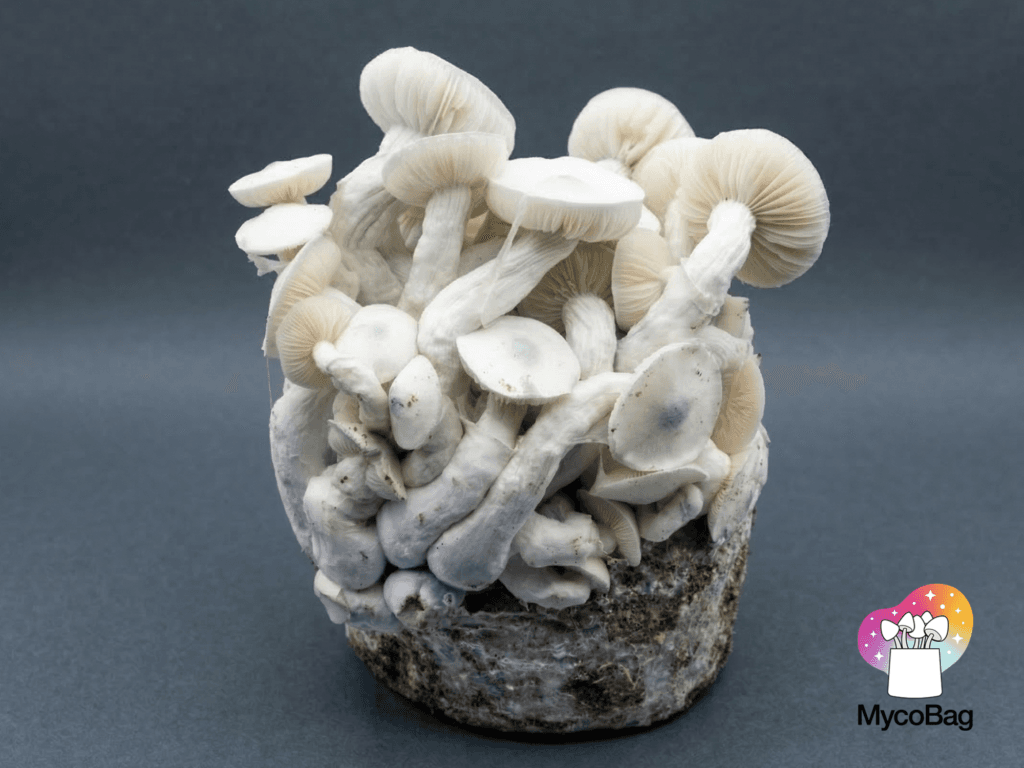
- Cascadian Teacher: Known for colossal production and unbeatable consistency in tryptamine content, making it the universal choice for mycological research[cite: 88, 98, 100].
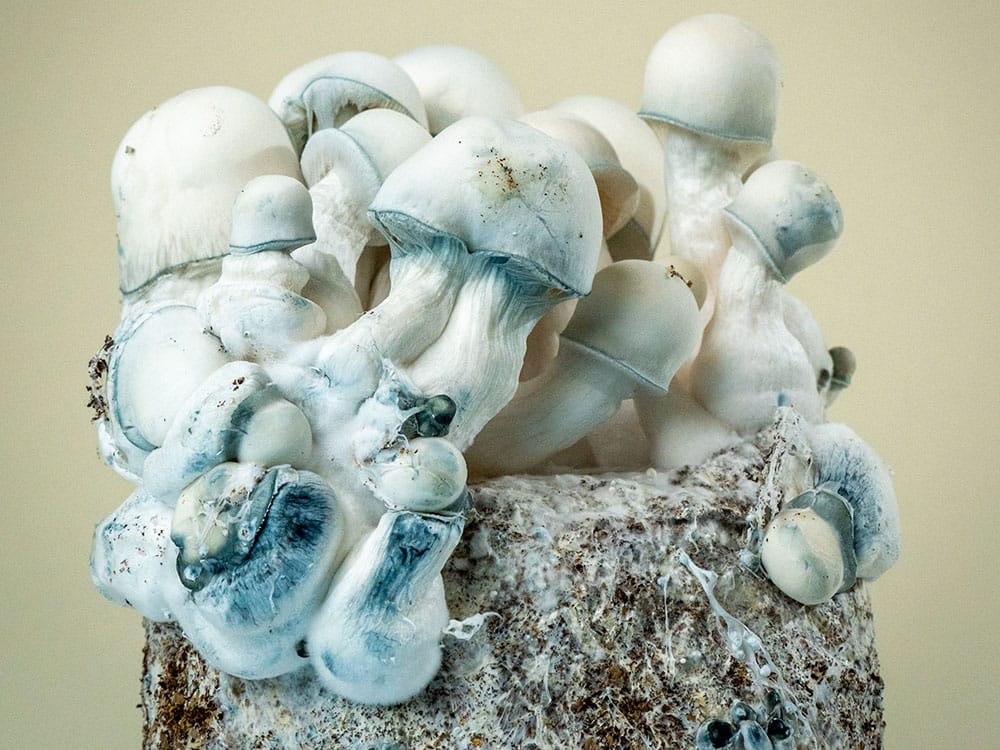
- Tidal Wave Ape: The apex of extreme biochemical yield, synthesized from the potent Tidal Wave and Albino Penis Envy, triggering immediate deep blue oxidation upon harvesting[cite: 76, 77, 85].
- Long Whyte Cloudz: An albino phenotype that produces completely translucent, invisible spores, ensuring an immaculate harvest ideal for precise analytics without visual distractions[cite: 114, 118, 119].
- Whitebilly: An incredibly dense, leucistic isolation of the Hillbilly strain, celebrated for its rhizomorphic voracity and wide structural bases that prevent lateral tipping[cite: 102, 104, 107].
Standardized Cultivation: The 100% Hermetic “Plug and Play” System
Traditional mushroom cultivation in containers requires opening the lid, exposing the interior to environmental bacteria and molds[cite: 6]. To study the life cycle and chemical composition of these fungi accurately, researchers require zero-contamination environments.
The MycoBag eliminates this margin of error through a 100% hermetic, sterile design[cite: 5, 7]. Featuring an exclusive “Plug and Play” system, the user does not need to inoculate, water, or manipulate the bag[cite: 9]. A specialized microporous filter autonomously maintains the ideal oxygen exchange while blocking external contaminants[cite: 13, 17].
To scale studies according to space and needs, two formats are available:
- MiniMycoBag (700 ml / 400g): Ideal for beginners or limited laboratory spaces, completing its cycle in about four weeks[cite: 53, 54].
- MycoBag (2,000 ml / 1,500g): Multiplies productive capacity, easily exceeding 400-600g of fresh mushrooms, and supports a second flush due to its excellent moisture retention[cite: 58, 59, 60].
Measuring Alkaloids: The MycoTest Service
To add scientific and objective value to every harvest, researchers can utilize the exclusive MycoTest service[cite: 33]. This tool allows for the qualitative study of the fungi’s composition, providing essential data on the alkaloid synthesis of strains like the Cascadian Teacher or Tidal Wave Ape[cite: 33].
Risks, Side Effects, and Drug Interactions
While the clinical safety profile of psilocybin is favorable in screened populations, acute risks include psychological distress, transient hypertension, and nausea. It is contraindicated for individuals with schizophrenia spectrum disorders or cardiovascular instability.
Medication interactions must be monitored. SSRIs can blunt the effects of psilocybin, while MAOIs amplify its duration. Strict ethical oversight and psychological vulnerability screening are standard in all clinical trials to mitigate adverse experiences.
Laws, Regulations, and Ethical Considerations
The legal landscape surrounding psilocybin is highly heterogeneous. Under the UN 1971 Convention, it is broadly scheduled, though specific regions (like Oregon and Colorado in the U.S.) have initiated decriminalization and licensed therapeutic access. In many EU jurisdictions, spores are legal for microscopy, while cultivated mycelium containing psilocybin is regulated. Researchers must always ensure compliance with local legislation before commencing any mycological studies.
Conclusion
Through its neuroplastic catalysis, psilocybin offers a promising frontier in mental health interventions. As the clinical understanding of these compounds grows, the need for standardized, sterile, and genetically stable fungi becomes absolute. Tools like the MycoBag cultivation system ensure that mycological research remains predictable, safe, and scientifically rigorous.

 Sale!
Sale! Sale!
Sale!