Psilocybe mushrooms are among the most intensively discussed fungi in modern mycology. Their significance extends far beyond their psychoactive chemistry: researchers study their taxonomy, evolutionary history, genetics, morphology and the biosynthetic pathways responsible for compounds such as psilocybin and psilocin.
At the same time, terminology surrounding these mushrooms is often confusing. Terms such as “magic mushrooms”, Psilocybe, Psilocybe cubensis, cultivars and even the Spanish slang word “monguis” are frequently used as if they meant exactly the same thing.
They do not.
Understanding the science behind Psilocybe requires separating the genus from individual species, species from cultivated genetic lines, and measurable biochemical data from reputation or marketing claims.
This guide explains that distinction, explores how psilocybin is produced and metabolised, and examines why controlled environments, genetic provenance and analytical testing have become increasingly important in contemporary mycological research.
What are Psilocybe mushrooms?
Psilocybe is a genus of fungi within the family Hymenogastraceae. Recent phylogenomic research describes roughly 165 species within the genus, distributed across different ecological environments around the world.
Many Psilocybe species are known for producing psilocybin and related tryptamine compounds. However, Psilocybe mushrooms and psilocybin-containing mushrooms are not perfect synonyms, because psilocybin biosynthesis has also evolved in fungi outside the genus.
A major 2024 phylogenomic study published in Proceedings of the National Academy of Sciences reconstructed the evolutionary relationships of the genus using thousands of gene families. The researchers concluded that the lineage leading to Psilocybe arose approximately 67 million years ago and also identified evidence that psilocybin biosynthesis was transferred to other mushroom groups during fungal evolution.
You can review the research through PubMed.
What does “monguis” mean?
In Spain, the word “monguis” is sometimes used informally to refer to psychedelic mushrooms. It is a colloquial term, not a scientific or taxonomic classification.
This distinction is worth making because “monguis” may refer broadly to psychoactive mushrooms in everyday conversation, whereas a scientific description should identify the actual genus and species whenever possible.
For example, Psilocybe cubensis is a species. Tidal Wave Ape, Cascadian Teacher and Albino Jedi Mind Fuck are cultivar or genetic-line names associated with that species.
Those categories should not be used interchangeably.
Psilocybe, Psilocybe cubensis and cultivars: what is the difference?
| Term |
What it means |
Example |
| Psilocybe |
A fungal genus containing numerous species |
Psilocybe |
| Species |
A formal taxonomic classification within the genus |
Psilocybe cubensis |
| Cultivar / genetic line |
A selected or propagated line associated with a species |
Cascadian Teacher |
| Phenotype |
Observable characteristics expressed by an organism |
Pale pigmentation or unusually thick stems |
| Psilocybin |
A naturally occurring tryptamine compound produced by certain fungi |
4-phosphoryloxy-N,N-dimethyltryptamine |
| Psilocin |
The pharmacologically active dephosphorylated metabolite of psilocybin |
4-hydroxy-N,N-dimethyltryptamine |
This vocabulary becomes particularly important when comparing mushroom genetics. A commercial cultivar name does not create a new species, and visual differences between two phenotypes do not necessarily demonstrate that they are unrelated genetically.
For a broader look at named P. cubensis lines, see our guide to different mushroom varieties and cultivars.
How do Psilocybe mushrooms live in nature?
Many Psilocybe mushrooms are saprotrophic fungi. Rather than producing energy through photosynthesis, they obtain nutrients by breaking down organic material in their environment.
Different species are associated with different ecological substrates, including soils, decaying plant material, woody debris, moss-rich environments and dung.
This ecological diversity is significant because Psilocybe is not biologically uniform. Species adapted to one ecological niche may behave very differently from species associated with another.
That is one reason researchers increasingly emphasise accurate species identification instead of treating every psilocybin-producing mushroom as biologically interchangeable.
How did psilocybin evolve?
One of the most interesting questions in modern fungal biology is why mushrooms evolved the ability to manufacture psilocybin in the first place.
Phylogenomic research indicates that the psilocybin biosynthetic pathway has a deep evolutionary history. The 2024 PNAS study suggests that psilocybin production emerged early in the evolution of Psilocybe, although its precise ecological function remains an active area of research.
Scientists have also found evidence that genes associated with psilocybin production moved between different fungal lineages through horizontal gene transfer.
That makes psilocybin particularly interesting from an evolutionary perspective. It is not simply a chemical present in mushrooms; it is part of a specialised biosynthetic system encoded by a group of fungal genes.
How do Psilocybe mushrooms produce psilocybin?
The biosynthesis of psilocybin is controlled by a specialised group of enzymes.
Research published in 2017 identified four key enzymes involved in the Psilocybe pathway:
- PsiD, a fungal tryptophan decarboxylase;
- PsiH, a monooxygenase;
- PsiK, a kinase;
- PsiM, a methyltransferase.
Together, these enzymes participate in the fungal biosynthetic pathway that converts precursor molecules derived from tryptophan into psilocybin.
The discovery helped move the study of psychedelic mushrooms away from purely descriptive chemistry and toward a genetic and enzymatic understanding of how these compounds are produced. The original research is available through PubMed.
Importantly, identifying this biological pathway does not mean that every Psilocybe species—or every specimen within a species—contains exactly the same concentration of these compounds.
Psilocybin vs psilocin: what is the difference?
Psilocybin and psilocin are related but chemically distinct compounds.
Psilocybin acts primarily as a prodrug. After entering the body, it is dephosphorylated to form psilocin, the metabolite responsible for most of the characteristic pharmacological activity.
Psilocin interacts with several serotonin receptor subtypes, with the serotonin 5-HT2A receptor playing a particularly important role in its psychoactive effects.
A pharmacological review indexed by PubMed describes psilocin as the principal active metabolite of psilocybin and discusses its activity at 5-HT2A and other serotonergic receptors. You can consult the review on PubMed.
For a deeper explanation of this subject, read our dedicated guide to what psilocybin is and how it acts in the brain.
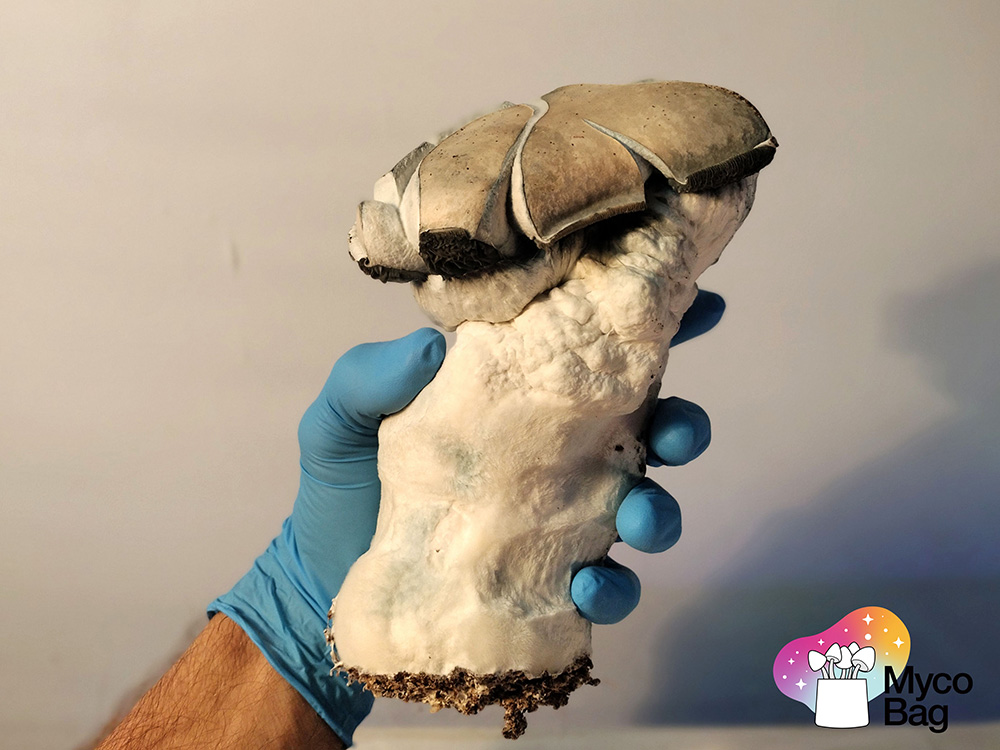
Why do some Psilocybe mushrooms turn blue?
The blue bruising seen in many psilocybin-producing mushrooms is one of their best-known biochemical characteristics.
It is also frequently oversimplified.
The colour change is caused by a biochemical reaction triggered when fungal tissue is damaged. Research into the process has identified an enzymatic sequence involving the conversion of psilocybin into psilocin and the subsequent oxidation and oligomerisation of psilocin-derived molecules.
The resulting compounds generate the characteristic blue coloration.
The mechanism was investigated in the study Injury-triggered blueing reactions of Psilocybe “magic” mushrooms.
Does stronger blue bruising mean more psilocybin?
No precise potency measurement can be obtained simply by looking at the intensity of blue bruising.
Bruising demonstrates that a chemical reaction is taking place within damaged fungal tissue, but colour intensity is a qualitative observation rather than a quantitative chemical test.
This is why descriptions such as “the bluest mushroom is the strongest” should not be treated as scientific measurements.
Determining the chemical composition of a specific specimen requires appropriate analytical testing. Results should also be attributed to the actual sample tested rather than automatically extrapolated to every specimen carrying the same cultivar name.
Why controlled environments matter in Psilocybe research
Controlled environments have an important role in modern fungal research because they allow scientists to reduce variables that would otherwise make biological comparisons difficult.
If researchers want to compare morphology, genetics or chemical composition, they need to know whether observed differences come from the organism itself or from major differences in environmental conditions.
A recent study published in the Journal of AOAC International developed reference material from multiple Psilocybe species under controlled research conditions. Researchers combined morphological and microscopic identification with DNA sequencing and chemical profiling.
The project successfully examined six different Psilocybe species, demonstrating why controlled biological material can be valuable when creating scientifically useful reference datasets. The full research paper is available through PubMed Central.
The important principle is standardisation: controlling as many variables as practical makes comparisons more meaningful.
Contamination is a research variable, not just an inconvenience
Fungal cultures do not exist in isolation from the microbial world. Environmental fungi and bacteria compete for the same biological resources, and contamination can alter or invalidate observations.
Genera such as Trichoderma contain fungi commonly encountered as contaminants in mushroom-production environments. Their presence can change the biological system being observed, making it difficult to determine whether a result reflects the intended fungus or microbial competition.
For this reason, contamination control is fundamentally a question of experimental integrity.
MycoBag has explored this subject in more detail in our article on contamination risk in monotub-style systems.
Why passive gas exchange matters in closed systems
Fungi respire. Their metabolic activity consumes oxygen and releases carbon dioxide, which means a biologically active closed environment cannot simply be treated as an impermeable container.
Research and commercial mushroom systems therefore often use filter membranes that permit gas exchange while reducing direct exposure to particles from the surrounding environment.
This is the principle behind the microporous filter used in the MycoBag Plug & Play system. The filter supports passive gas exchange while the closed bag design reduces the need for repeated manual handling.
The technically relevant distinction is risk reduction, not absolute sterility: a closed filtered system is designed to reduce environmental exposure, not to make biological contamination impossible.
For a broader comparison of system design, see MycoBag vs traditional container systems.
Why substrate matters in fungal biology
A substrate is more than a physical surface. For saprotrophic fungi, it forms part of the biological environment from which the mycelial network obtains resources.
Different fungal species have different ecological relationships with organic materials, which is why substrate biology is an important field of study in both academic and commercial mycology.
Properties such as physical structure, available water, aeration and nutrient composition can influence microbial communities and fungal development.
For an introduction to these principles, see our guide explaining what makes a mushroom substrate and why its structure matters.
Species, genetics and phenotype should not be confused
One of the most persistent problems in mushroom terminology is the tendency to treat species, cultivars and phenotypes as equivalent categories.
They describe different things.
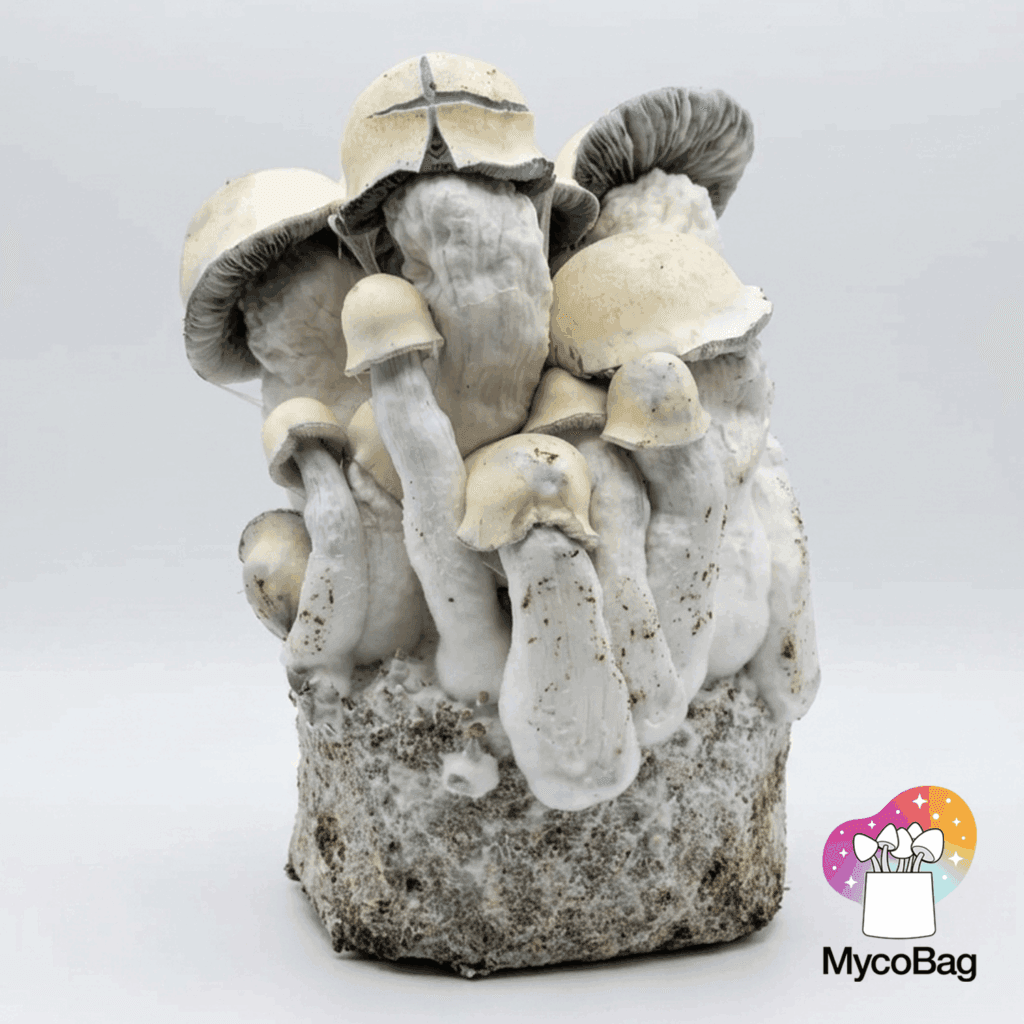
Psilocybe cubensis identifies a species. Names such as Tidal Wave Ape, Cascadian Teacher, Whitebilly and Albino Jedi Mind Fuck refer to selected lines associated with that species.
A phenotype describes the traits expressed by an organism: colour, proportions, cap morphology or other observable characteristics.
Those differences can be influenced by genetics, but appearance alone does not provide a complete genetic history.
For researchers, provenance is therefore as important as the cultivar name. Knowing where biological material originated and which claims are supported by supplier documentation or analytical results is more informative than relying on reputation alone.
Selected Psilocybe cubensis genetics at MycoBag
The current MycoBag range includes several named Psilocybe cubensis cultivars with distinct documented identities.
- Cascadian Teacher — a Teacher-family cultivar in the current Full Canopy Genetics selection used by MycoBag.
- Albino Jedi Mind Fuck — an albino isolation whose current supplier lineage has been documented by Full Canopy Genetics.
- Tidal Wave Ape — a pale Tidal Wave-related cultivar associated with Tidal Wave and Albino Penis Envy genetics in current MycoBag documentation.
- Whitebilly — a pale, compact P. cubensis cultivar with a markedly different morphology from the Teacher phenotype.
The important point is not to rank these cultivars with unsupported claims about which is “strongest” or “best”.
A more useful approach compares their documented provenance, morphology, supplier information and analytical evidence where reliable data is available.
Why genetic consistency matters in scientific research
Scientific comparisons depend on knowing what material is being compared.
If two samples carry the same commercial name but originate from different genetic populations, treating them as identical can introduce uncertainty. Conversely, two visibly different phenotypes may still share substantial ancestry.
This issue is particularly relevant in Psilocybe cubensis.
A genomic study of commercially cultivated P. cubensis found relatively low genetic diversity among many domesticated cultivars and substantial relatedness between commercial lines.
The study is available through PubMed.
The result reinforces an important principle: cultivar names are useful labels, but they are not substitutes for genetic evidence.
Frequently asked questions about Psilocybe mushrooms
What are Psilocybe mushrooms?
Psilocybe is a genus of fungi containing numerous species, many of which biosynthesise psilocybin and related tryptamine compounds. They occur in different ecological environments around the world.
Are Psilocybe mushrooms the same as magic mushrooms?
Not exactly. “Magic mushrooms” is an informal term for mushrooms containing psychedelic compounds such as psilocybin. Many belong to Psilocybe, but psilocybin-producing species also exist in other fungal genera.
What is Psilocybe cubensis?
Psilocybe cubensis is one species within the Psilocybe genus. Many well-known commercial cultivar names, including Cascadian Teacher and Albino Jedi Mind Fuck, are associated with P. cubensis.
What is the difference between psilocybin and psilocin?
Psilocybin is primarily a prodrug that is dephosphorylated in the body to produce psilocin. Psilocin is the principal active metabolite and interacts with several serotonin receptors, particularly 5-HT2A.
Why do Psilocybe mushrooms bruise blue?
Tissue damage can trigger an enzymatic reaction involving psilocybin, psilocin and oxidised psilocin-derived molecules. These reactions produce compounds responsible for the characteristic blue colour.
Does blue bruising reveal mushroom potency?
No. Bruising is a qualitative observation and cannot provide a precise measurement of psilocybin, psilocin or total tryptamine concentration. Quantitative comparison requires analytical testing.
What does “monguis” mean?
“Monguis” is an informal Spanish term sometimes used for psychedelic mushrooms. It is not a taxonomic term and does not identify a specific genus, species or cultivar.
Why are controlled environments useful in mycological research?
Controlled environments help researchers reduce unwanted variation between samples. This makes comparisons of morphology, genetics and chemical composition easier to interpret and can reduce interference from environmental contamination.
Final thoughts
The science behind Psilocybe mushrooms is considerably more complex than their reputation suggests.
They represent a diverse fungal genus with a deep evolutionary history, specialised biosynthetic genes and ecological relationships that vary between species. Psilocybin itself is only one part of that biological picture.
Modern research increasingly combines taxonomy, DNA analysis, analytical chemistry and controlled biological material to understand these fungi more accurately. That same approach also reveals why cultivar names, visual characteristics and potency reputations should never be treated as interchangeable forms of evidence.
For MycoBag, this scientific perspective is particularly relevant. The value of a closed Plug & Play system lies in reducing unnecessary handling and supporting passive gas exchange, while selected genetics provide a clearer basis for documenting the biological material being studied.
Better mycology begins with better distinctions: species, genetics, phenotype, chemistry and environmental conditions each tell a different part of the story.
Explore the MycoBag guide to Psilocybe cubensis varieties


 Sale!
Sale! Sale!
Sale!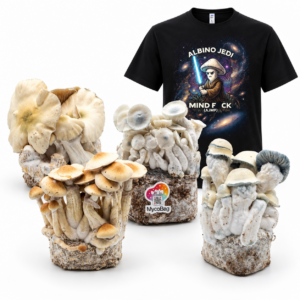 Sale!
Sale!