Contemporary mycology has long surpassed simple field foraging to delve into the precision of cellular biology and advanced genetic selection. In laboratories and study environments across Europe, the focus is increasingly shifting toward isolating lines that offer an unusual balance between biological vigor, environmental resilience, and complex biochemical profiles. Among the multitude of variations currently available for the specialized researcher and cultivator, the Albino Tidal Wave genetics has emerged as one of the most fascinating and highly sought-after subjects of study.
Far from being a wild strain or a random mutation found by chance in nature, this lineage represents the culmination of highly meticulous hybridization work. Its development does not merely seek an aesthetic singularity, but rather the stabilization of very specific physiological characteristics that push the limits of fungal performance. In this analysis, we will break down the intricate taxonomic family tree of this mutation, its morphological peculiarities, and the most suitable contemporary methodologies for its incubation, paying special attention to the mitigation of contamination vectors.
The genetic puzzle: understanding the phenotypic inheritance
To fully understand how the Albino Tidal Wave mycelium behaves when introduced to a sterilized substrate, it is essential to trace its genetic pedigree. High-yield strains are rarely the product of chance; they function as biological libraries that accumulate the most desirable traits of their predecessors after multiple generations of selective breeding.
The starting point of this lineage is found in the creation of the original Tidal Wave hybrid. This initial cross combined two absolutely legendary genetics in the cultivation sphere: the B+ and the Penis Envy. From the B+ strain, the new hybrid inherited a remarkable rhizomorphic aggressiveness—that is, a colonization speed that allows the cellular network to expand and assimilate the substrate’s nutrients with extreme rapidity. On the other hand, the Penis Envy line contributed an exceptionally dense cellular architecture, responsible for generating very heavy and fleshy fruiting bodies that would otherwise have an excessively slow development.
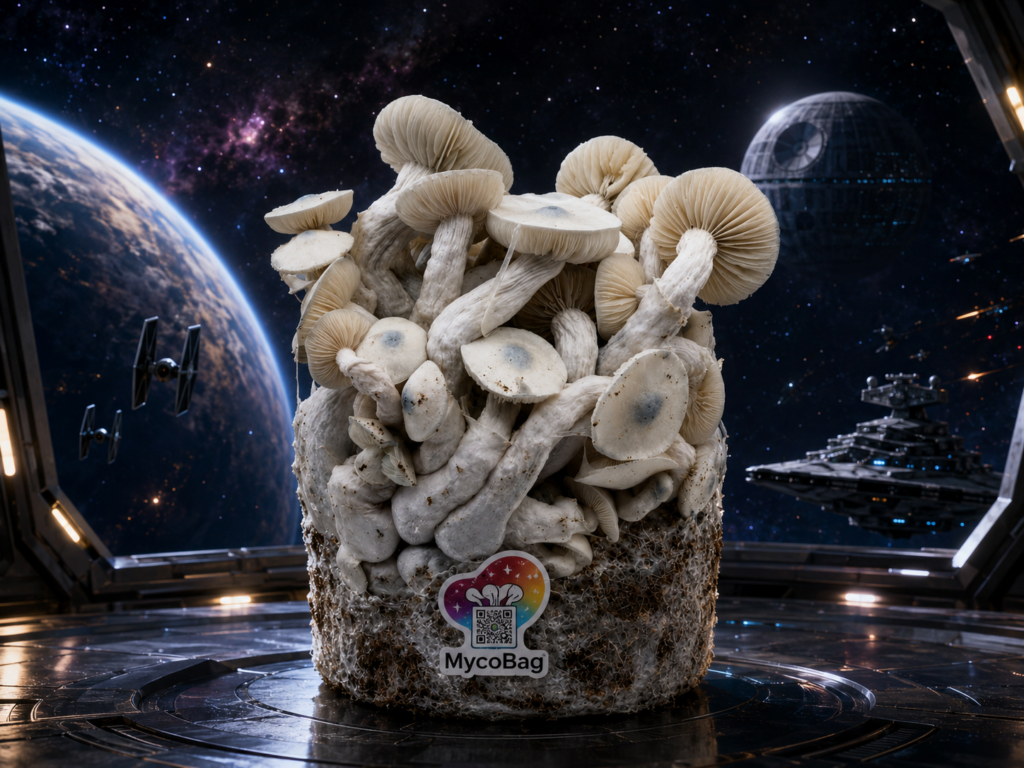
The qualitative leap towards the albino version occurred when this robust hybrid was subjected to an additional cross with the Albino Penis Envy (APE) mutation. This second level of hybridization pursued a very specific objective in the laboratory: to introduce and fix the recessive albinism gene without losing the expansive speed of the B+ or the structural density of the PE. The successful result of this fusion is a genetic line where a complete interruption in the synthesis of natural pigments occurs, giving rise to immaculate white fruiting bodies. The stabilization of these three key variables makes the Albino Tidal Wave an exceptional biological model for studying phenotypic inheritance in basidiomycete fungi.
Biomechanical advantages of an atypical morphology
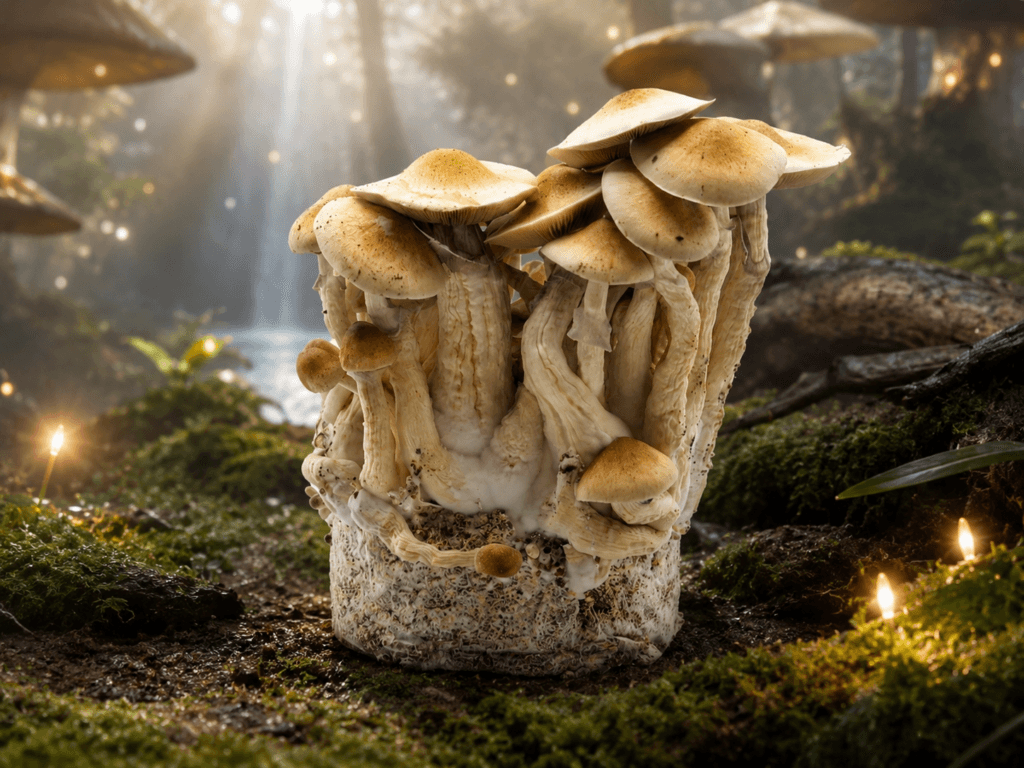
When the cultivator observes the onset of the primordiation phase (pinning) in a block colonized by Albino Tidal Wave, they quickly notice that its development diverges from the classic slender shape presented by other species. From a purely morphological standpoint, this genetics tends to fruit forming extremely compact clusters, characterized by short stipes (stems) of an unusual thickness.
The pilei (caps) lack any brown or golden hues, displaying instead colors that range from pure white to pale ivory. As the mushroom matures and the veil tears, the edges of the cap adopt a markedly asymmetrical and deeply undulating shape, a visual peculiarity that immediately evokes the crest of a breaking wave, which inspired the variety’s name.
However, this squat structure is not a simple visual curiosity; it provides a fundamental biomechanical advantage during the cultivation cycle. By maintaining a very low center of gravity close to the surface of the nutritional block, the risk of the fruiting body collapsing, bending, or breaking under its own weight during the final stages of maturation is drastically reduced. This physical stability is a determining factor that facilitates the intact harvesting of the specimens, which is crucial when they are intended for genetic preservation or tissue analysis.
Additionally, this mutation presents a reproductive peculiarity of immense operational value: its sporulation is minimal, extremely delayed, and produces completely translucent spores. In regular mycological study, the massive release of dark spores can cover the substrate and smaller specimens under a dense layer of biological soot, suffocating the medium and hindering the development of future flushes. The absence of pigmentation in the spores keeps the cultivation area visually clean and operationally intact.
The biochemical profile and the illusion of blue oxidation
The scientific interest aroused by the Albino Tidal Wave far transcends its striking morphology; its intricate profile of alkaloids and tryptamines is the subject of constant debate and analysis. Being a genetics structured to synthesize and retain high concentrations of active cellular compounds, the handling of the harvest requires a specific methodology.
A recurring clinical observation when handling, cutting, or simply brushing against the tissue of these specimens is the rapid appearance of an intense dark blue coloration in the exposed areas. This phenomenon, widely documented in mycological literature as oxidation or “bluing”, is the visual result of a specific enzymatic reaction: the accelerated degradation of psilocin upon coming into direct contact with atmospheric oxygen.
Although the intensity and immediacy of this blue color often impress cultivators and is frequently misinterpreted as a measure of strength, it is fundamental to maintain analytical rigor. Blue oxidation is exclusively a qualitative indicator; it confirms that tryptamine compounds are reacting within the cellular tissue, but under no circumstances can it replace a quantitative chemical analysis. Assuming the pharmacological profile of a harvest based solely on the darkness of the bruising is a procedural error. To obtain objective, precise, and scientifically valid data, it is imperative to resort to specific reagents or liquid chromatography tests in a laboratory setting.
Environmental vulnerability: the problem with open systems
Given that the Albino Tidal Wave is a highly specialized mutation genetically programmed to perform under optimal conditions, its incubation demands strictly controlled environmental parameters. Traditional and homemade methods based on open containers or “monotub” systems (perforated plastic boxes or manual opening setups) present critical vulnerabilities when working with biotypes of this caliber.
The main deficiency of unsealed containers lies in the imperative need for mechanical intervention, specifically manual ventilation or fanning. Every time the lid of a container is removed to expel the accumulation of carbon dioxide and renew the oxygen, the hyper-nutritious substrate is directly and immediately exposed to the environmental microscopic load. The air we breathe is naturally saturated with latent spores of opportunistic molds and bacteria.
For a genetic line that invests an immense amount of its energy reserve in the cellular synthesis of alkaloids and the construction of very dense tissues, having to halt its growth to biologically fight against external pathogens is usually lethal. Fast-spreading molds, such as the dreaded Trichoderma genus or various Penicillium species, take advantage of the slightest breach in sterility to colonize the grain or supplemented sawdust. Once established, they easily outpace the growth rate of the desired mycelium, competing for resources and secreting toxic metabolites that paralyze the fungal network, usually resulting in the necrosis of the block and the total loss of the culture.
Biological isolation and passive filtration technology
To suppress environmental risk variables and protect the integrity of the mycelial network against microscopic aggressions, modern methodology absolutely prioritizes the use of closed fruiting environments. In this context of maximum technical demand, the integral system proposed by MycoBag offers a precise solution, replacing vulnerable plastic containers with medical-grade sterilized cultivation bags.
The true technological core of this system resides in the integration of high-efficiency microporous filters welded to the wall of the bag. This specialized membrane allows for a passive, constant, and safe gas exchange. It facilitates the uninterrupted release of the CO2 generated by the mushroom’s respiration and allows fresh oxygen to enter, acting simultaneously as an insurmountable physical barrier against contaminating spores. This hermetic design negates the need for manual ventilation, definitively closing the door to the greatest known contamination vector in indoor cultivation.
But success does not depend solely on hardware; the cellular origin of the biological material determines the final viability of any mycological project. Through its catalog, MycoBag provides access to the Tidal Wave Ape genetics originating from the direct and purified isolations of Full Canopy Genetics. By working with elite cell lines, which have already been meticulously selected to thrive and colonize under the restricted oxygen conditions offered by the bag, the cultivator ensures an expansive and flawless development. Respecting the appropriate temperature ranges, the complete biological cycle in these isolated sterile environments progresses unusually fast and efficiently, generally culminating in a period of between 25 and 35 days.
Frequently asked questions about the Albino Tidal Wave genetics
What is the visual difference between the classic Tidal Wave and the Albino variant?
The main distinction is the pigmentation of the sporocarp. While the standard Tidal Wave genetics develops caps in golden, caramel, or light brown tones typical of the B+ inheritance, the Albino Tidal Wave mutation suffers from a genetic inability to produce these pigments, resulting in immaculate white or ivory fruiting bodies, although both share the characteristic wavy edges on the pileus.
Why is the use of plastic tubs discouraged for cultivating this variety?
Tupperware-type systems require periodic opening to renew stagnant air. Being a highly refined genetics, the mycelium is very sensitive to competition from environmental molds. Opening the container breaks sterility and exposes the nutritious substrate to contaminants in the room’s air, exponentially elevating the risk of losing the culture to Trichoderma or bacterial infections.
Is it true that a darker blue color means the mushroom is more potent?
No, that statement is a common myth without empirical backing. The appearance of the blue bruise indicates the presence of psilocin oxidizing upon contact with air, but the darkness or extent of the stain depends on many other factors, such as tissue hydration or the level of mechanical friction. It is not possible to determine the milligram per gram concentration of active compounds by observing the color; the only way to conclusively quantify potency is through rigorous laboratory analysis.