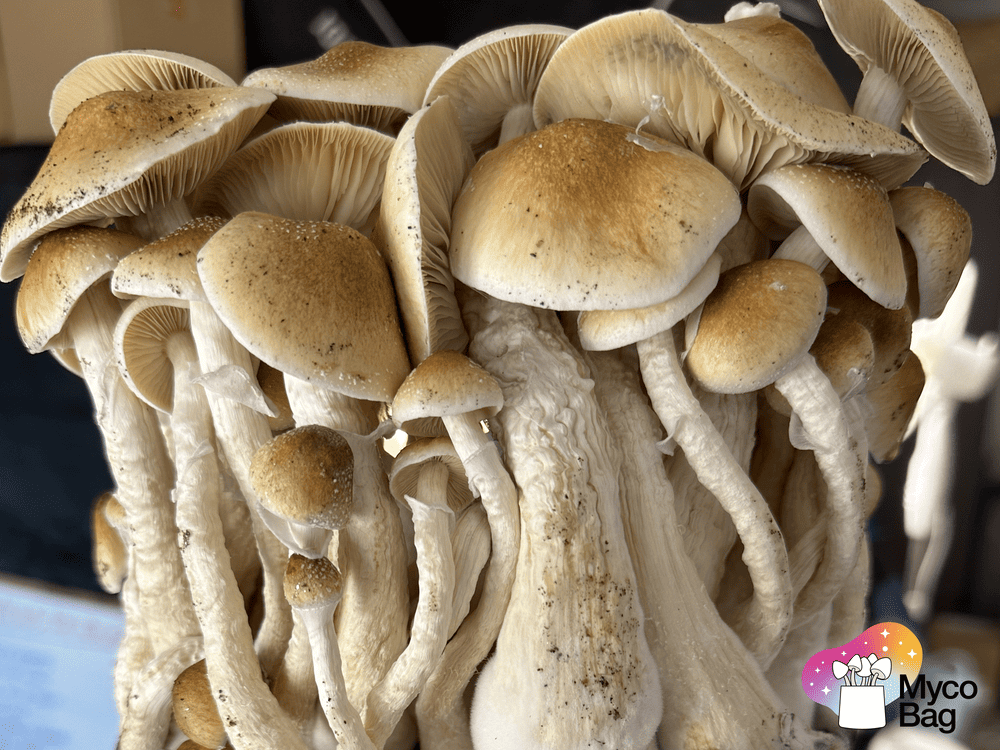
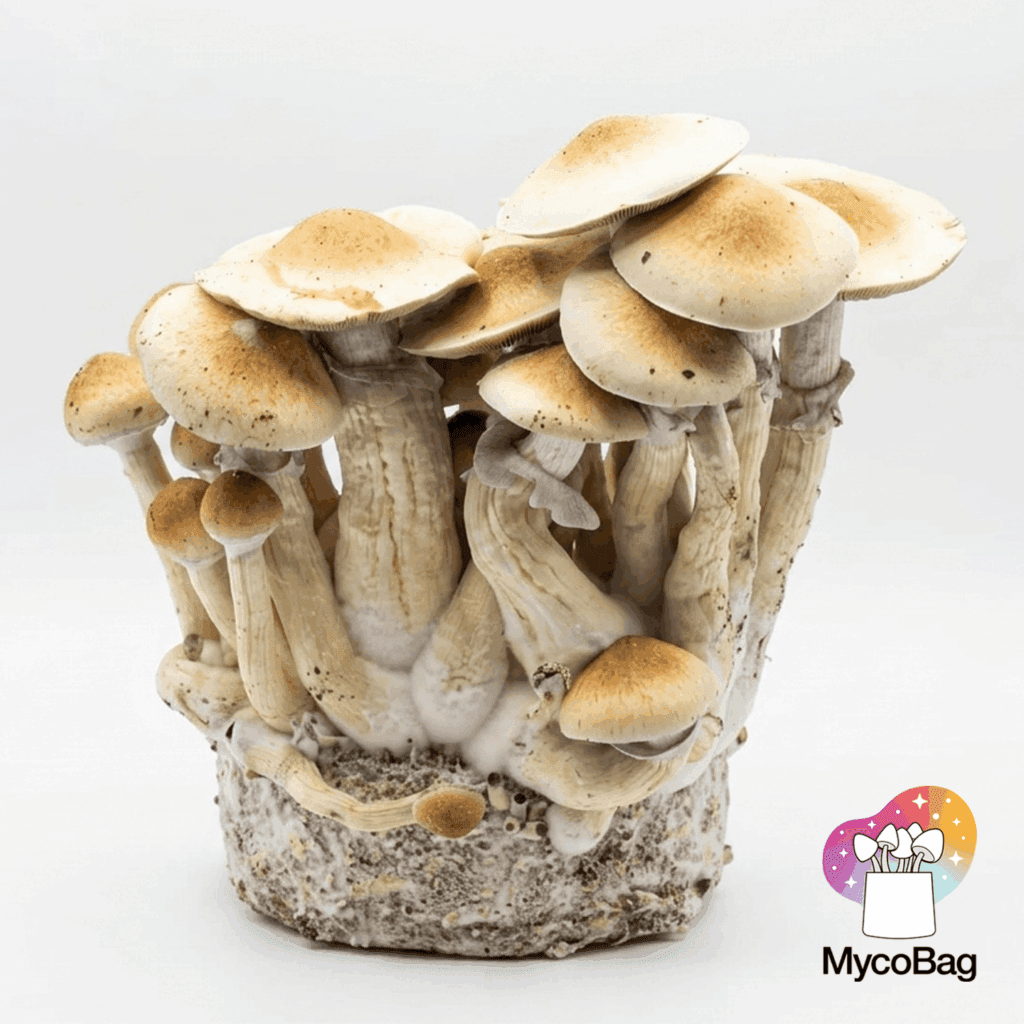
Albino vs leucistic mushroom genetics are frequently confused because both can produce unusually pale, cream or almost white fruiting bodies. Visually, the difference may appear subtle. Biologically, however, the two terms are not intended to describe exactly the same pigmentation phenotype.
The important distinction is not that albino mushrooms are automatically rarer, stronger or more potent. Albino and leucistic describe different patterns of pigmentation, while the underlying genetic mechanism can vary between individual fungal lineages.
Here are five useful differences to understand when comparing them.
1. Albino vs leucistic mushroom genetics: the main difference
In general mycological usage, albino describes a phenotype showing a very strong or apparently complete loss of normal visible pigmentation.
Leucistic is usually used when pigmentation is strongly reduced but not completely absent. A leucistic mushroom may appear white, ivory or pale while retaining colour in particular tissues or stages of development.
This distinction sounds straightforward, but fungal pigmentation is biologically complex. Colour should not be reduced to a simple “melanin on or off” switch.
Fungi can produce melanins, carotenoids and other pigments with different chemical pathways and biological functions. A scientific review indexed by PubMed describes fungal melanins as pigments involved in processes including protection from UV radiation, oxidative stress and other environmental challenges.
You can read the peer-reviewed review on fungal melanin.
2. Colour describes phenotype, not the complete genotype
A white mushroom does not automatically reveal which genetic change caused its appearance.
Albino phenotypes can result from mutations affecting pigment-production pathways. This has been demonstrated in fungal research. For example, researchers studying an albino mutant of Ceratocystis resinifera identified a genetic change affecting a melanin biosynthesis pathway.
The original study is available through PubMed.
However, that does not mean every mushroom described commercially as albino shares the same mutation. The visible phenotype tells us what the organism looks like; documenting the genotype requires additional evidence.
3. Spore colour can provide clues, but it is not a universal rule
Spore pigmentation is sometimes used in mushroom culture to help distinguish albino-looking and leucistic phenotypes.
A pale fruiting body accompanied by normally pigmented spores may support a leucistic description, while reduced pigmentation across several structures may support an albino description.
But this should not be treated as an absolute diagnostic test. Fungal pigment biology differs between species and genetic lines, and commercial terminology is not always applied consistently.
For that reason, albino vs leucistic mushroom genetics should be interpreted using lineage documentation alongside morphology rather than colour alone.
4. Albino Jedi Mind Fuck and Whitebilly illustrate the distinction
Albino Jedi Mind Fuck is particularly useful because MycoBag has primary supplier documentation for its genetic history.
Full Canopy Genetics describes AJMF as an albino isolation related to the original Jedi Mind Fuck lineage. According to the supplier documentation available to MycoBag, its material was acquired from Denver Mycology, subsequently crossed with material received from Edward Grand and then worked and stabilised.
This allows AJMF to be described as an albino isolation with documented supplier provenance. It does not mean that every morphological or biochemical characteristic of AJMF is caused specifically by albinism.
Whitebilly, by contrast, is described by MycoBag as a leucistic line related to Hillbilly.
Its pale morphology demonstrates why albino and leucistic cultivars can be difficult to distinguish from photographs alone. Documentation of the lineage provides more useful information than simply assigning a label based on colour.
5. Albino and leucistic do not describe potency
One of the most important misconceptions about albino vs leucistic mushroom genetics is that pigmentation predicts chemical composition.
It does not.
Pigmentation, morphology and alkaloid concentration are different biological characteristics. A pale phenotype does not by itself demonstrate higher levels of psilocybin, psilocin or other compounds.
The same limitation applies to blueing, stem thickness and overall size. They may be useful observations, but they are not substitutes for analytical measurements.
When chemical composition is relevant to research, MycoTest provides analytical information that cannot reliably be obtained from appearance alone.
Why phenotype and genetics should be kept separate
Phenotype describes what we can observe. Genotype refers to inherited biological information.
The two are connected, but they are not interchangeable. The visible result of a fungal lineage reflects both its genetic background and the environment in which it is expressed.
This is why MycoBag increasingly focuses on documented lineage and phenotype rather than assuming that unusual appearance proves a specific genetic mechanism.
For the broader terminology surrounding cultivar, isolation, phenotype, mutation and hybridisation, see our complete guide to mushroom genetics.
Frequently asked questions about albino vs leucistic mushroom genetics
Are albino and leucistic mushrooms the same?
No. Albino generally refers to a more complete loss of visible pigmentation, while leucistic usually describes strongly reduced but partially retained pigmentation.
Can you identify an albino mushroom from colour alone?
Not reliably. Colour describes the phenotype, but the underlying biological mechanism requires additional genetic or lineage information.
Do albino mushrooms always have colourless spores?
No universal rule should be applied. Spore pigmentation can provide useful context in some genetic lines, but it is not sufficient on its own to establish the underlying mutation.
Are albino mushrooms more potent than leucistic mushrooms?
No evidence supports using albinism or leucism alone as a reliable predictor of chemical composition. Potency requires independent analytical evidence.
What albino vs leucistic mushroom genetics really tell us
Albino vs leucistic mushroom genetics is primarily a question of pigmentation phenotype and documented lineage, not a ranking of performance or potency.
The most reliable approach is to separate three things: what the mushroom looks like, what is known about its genetic history and what analytical measurements actually demonstrate.
Colour describes the phenotype. Documentation explains the lineage. Analytical data describes the chemistry.


 Sale!
Sale! Sale!
Sale! Sale!
Sale!