For anyone entering the fascinating field of mycology, the very first question that arises is usually: how are magic mushrooms cultivated? While finding them in the wild requires extensive foraging skills and carries immense risks of misidentification, cultivating them indoors has become a precise science.
Understanding exactly how are magic mushrooms cultivated is essential for anyone looking to research their life cycles, biological structures, or alkaloid profiles. In this comprehensive guide, we will break down the traditional techniques used by amateur growers, the massive risks involved, and how modern laboratory-grade equipment is completely revolutionizing the mycological space.
Skip the Hard Work and Start Growing
Do you want to avoid pressure cookers, messy substrates, and contamination? Jump straight to the rewarding part of research with our pre-sterilized, fully autonomous Plug & Play grow bags.
The Traditional Method: How Are Magic Mushrooms Cultivated at Home?
Historically, learning how are magic mushrooms cultivated meant following a strict, multi-step process often referred to as the PF Tek or the Monotub method. Fungi do not grow like plants; they do not use seeds or soil. Instead, they require sterile environments and highly specific nutrient bases. The traditional home cultivation process is broken down into four exhausting phases:
Phase 1: Spore Inoculation and Agar Work
The process begins with spores—the microscopic reproductive cells of the fungi. Growers typically purchase spore syringes or spore prints. Because spore syringes are notoriously “dirty” (containing ambient bacteria), advanced cultivators must first germinate these spores on sterile agar plates inside a Still Air Box (SAB) or under a laminar flow hood. They must transfer the healthy mycelium away from bacterial contamination over several weeks.
Phase 2: Preparing the Grain Spawn
Once a clean mycelium culture is established, it needs energy. Cultivators hydrate whole grains (like rye, oats, or millet) and load them into glass mason jars. To kill off all competing bacteria, these jars must be sterilized in a heavy-duty pressure cooker at 15 PSI for over 90 minutes. After cooling, the agar culture is transferred into the grain jars. The mycelium then takes 2 to 4 weeks to fully consume and colonize the grain, creating what is known as “grain spawn.”
Phase 3: The Bulk Substrate Transfer
Grain alone does not hold enough water to produce large fruiting bodies. Therefore, the colonized grain spawn must be mixed with a bulk substrate, typically consisting of coco coir and vermiculite. This bulk substrate must also be pasteurized perfectly. The grower opens their sterile grain jars and mixes them with the bulk substrate inside a plastic tub (monotub). This is the most dangerous step, as the sterile grain is suddenly exposed to the open air of a standard household.
Phase 4: Fruiting and Daily Maintenance
If the tub survives the transfer without catching green mold, the mycelium colonizes the bulk substrate. The grower must then induce fruiting by introducing fresh air exchange and dropping temperatures. This requires opening the tub to manually mist it with water and fan it with a lid several times a day to maintain the correct humidity microclimate until the mushrooms finally appear.
The Fatal Flaw: The Contamination Nightmare
When people ask how are magic mushrooms cultivated, they rarely anticipate the devastating failure rate of home methods. The grains and nutrients that mushrooms love are also the exact same foods that millions of airborne molds and bacteria crave.
Because standard kitchens and living rooms are filled with microscopic dust and mold spores, opening jars and mixing substrates in the open air almost always leads to contamination. The most common enemy is Trichoderma, an aggressive green mold that will rapidly rot your substrate, forcing you to throw away weeks of hard work and expensive materials.
The Modern Evolution: How Are Magic Mushrooms Cultivated Today?
Why spend hundreds of euros on pressure cookers, glass jars, and plastic tubs while battling constant contamination? The science of fungiculture has evolved, and modern clinical researchers no longer use the outdated methods described above.
Today, the answer to how are magic mushrooms cultivated is simple: Closed-Ecosystem Plug & Play Bags.
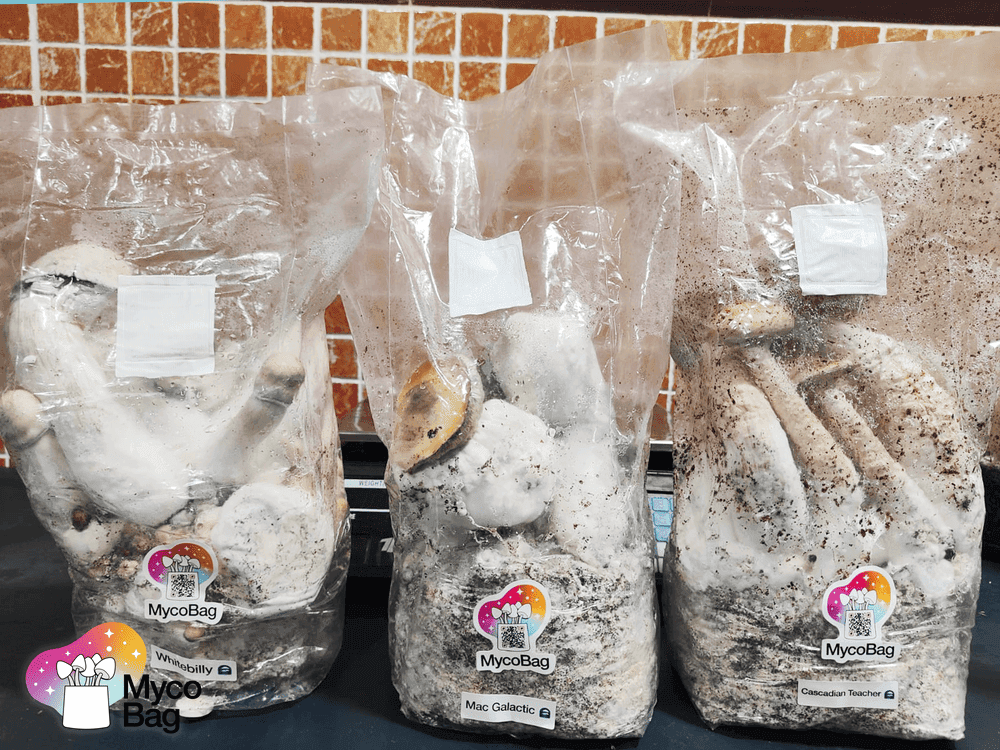
At MycoBag, we have engineered a system that completely bypasses the labor and risk of traditional cultivation. Our all-in-one grow bags contain a perfectly formulated mix of premium grain and bulk substrate, hydrated to the exact field capacity. But the true magic happens in our laboratories: every single bag is sterilized in medical-grade autoclaves.
We do the difficult agar work and inoculation for you, utilizing elite, stabilized strains from Full Canopy Genetics. The result is a hermetically sealed microclimate. Because the bag features a specialized micron filter patch, it breathes autonomously while blocking 100% of airborne contaminants. You simply place the bag in a warm room and wait. No misting, no fanning, and zero risk of external contamination. This allows you to effortlessly study premium genetics like the Albino Jedi Mind Fuck with absolute peace of mind.
Frequently Asked Questions (FAQ)
How long does it take to cultivate magic mushrooms?
Using traditional home methods, the process from spore to harvest can take 2 to 3 months due to agar work and multiple transfer phases. However, using a pre-colonized MycoBag Plug & Play system drastically reduces this timeline, typically yielding results in 25 to 35 days.
Are grow kits better than growing from scratch?
Yes, especially for beginners and serious researchers who require standardization. Grow kits completely eliminate the need to purchase expensive sterilization equipment and remove the massive risk of ambient contamination during the critical early phases of growth.
Do magic mushrooms need sunlight to grow?
No. Fungi do not photosynthesize. They only require dim, indirect ambient light to tell the mycelium which direction to grow. Direct sunlight will actually heat the substrate too much and can kill the sensitive mycelial network.
Master Your Mycological Research
By understanding how are magic mushrooms cultivated, it becomes crystal clear that relying on outdated, open-air home methods is a recipe for frustration and failure. Upgrading your workflow to fully sterilized, closed-ecosystem grow bags is the ultimate way to ensure your scientific research is safe, clean, and highly productive.
Join the Mycology Elite
Do you want to skip the trial and error and learn the most advanced cultivation secrets? Subscribe to the Mycobag newsletter today. You will receive expert environmental protocols, contamination prevention guides, and exclusive early access to our premium Full Canopy Genetics directly in your inbox.

 Sale!
Sale! Sale!
Sale!