Mushroom cultivation kits have revolutionized access to mycological education, enabling researchers, students, and enthusiasts to engage in the hands-on study of fungal biology. However, traditional tub cultivation often requires opening lids, exposing the fragile mycelial networks to environmental bacteria and competing molds, such as Trichoderma spp. or secondary invaders like Penicillium.
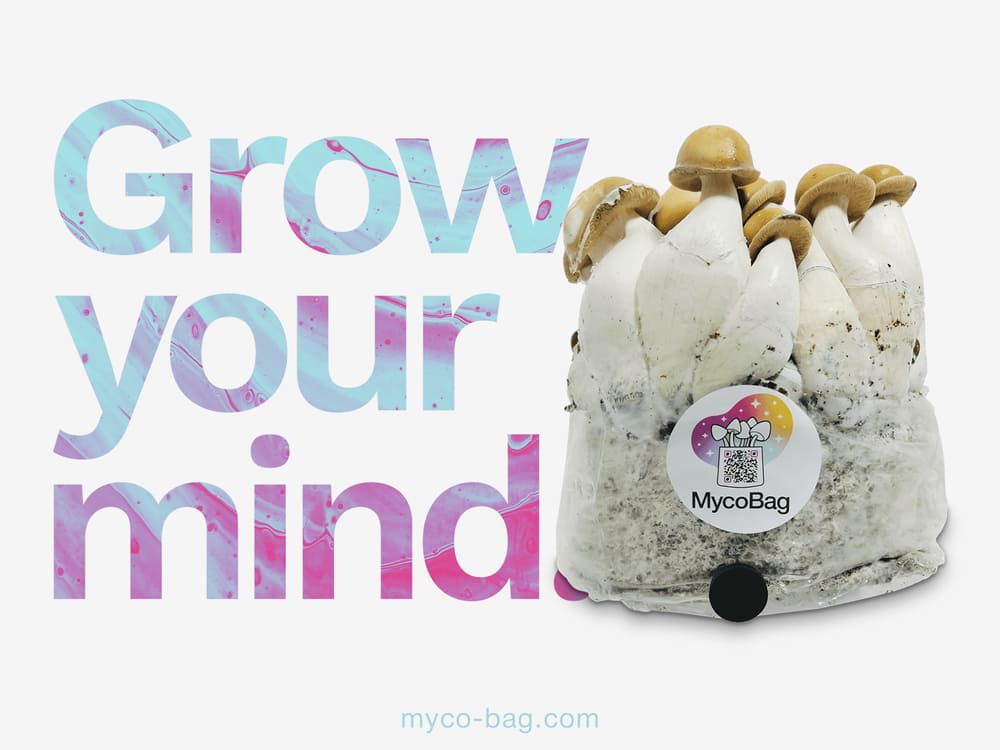
This is where the hermetic mushroom grow bag fundamentally changes the methodology. Designed with a 100% sterile and sealed environment, these “Plug & Play” systems eliminate the need to inoculate, water, or handle the substrate. They arrive pre-colonized and remain sealed until the sporocarps (fruiting bodies) are ready for harvest, making them the premier choice for modern, contamination-free mycological research.
The Biological Vulnerability of Traditional Cultivation
Understanding cultivation fundamentals is crucial for reproducible scientific results. In the past, researchers relied on standard tubs that demanded active maintenance and manual atmospheric exchange. Every time a lid is lifted for misting or fanning, the controlled environment is compromised. Fungal spores and ambient bacteria—which typically range from 0.5 to 5 microns in size—can easily infiltrate the substrate, drastically increasing the margin of error.
The MycoBag hermetic mushroom grow bag transforms this error-prone process into a rigorous scientific tool. By utilizing specialized microporous filter technology, the bag passively maintains the ideal oxygen-to-carbon dioxide ratio while physically blocking unwanted external pathogens.
The Medical-Grade Hermetic Mushroom Grow Bag Revolution
For optimal outcomes in accredited research programs or enzymatic mapping, maintaining absolute sterility is non-negotiable. MycoBags provide a medical-grade sterile baseline. The substrate bags undergo rigorous sterilization using commercial electric steam autoclaves in extended 2.5-hour cycles. This sustained direct steam contact at high pressure is the most dependable method to ensure the complete inactivation of highly resistant microorganisms and bacterial endospores.
With this autonomous regulation approach, researchers can focus purely on data collection and physiological observation. Simply place the bag in a suitable space without direct sunlight, maintain an ambient temperature of around 23°C, and within 25 to 35 days, you can observe the complete morphogenetic cycle.
Elite Genetics for Reliable Tryptamine Research
Selecting the appropriate fungal genetics is the cornerstone of any successful mycological study. At MycoBag, our substrates are paired with elite genetics exclusively developed by Full Canopy Genetics in Lakewood, Colorado.
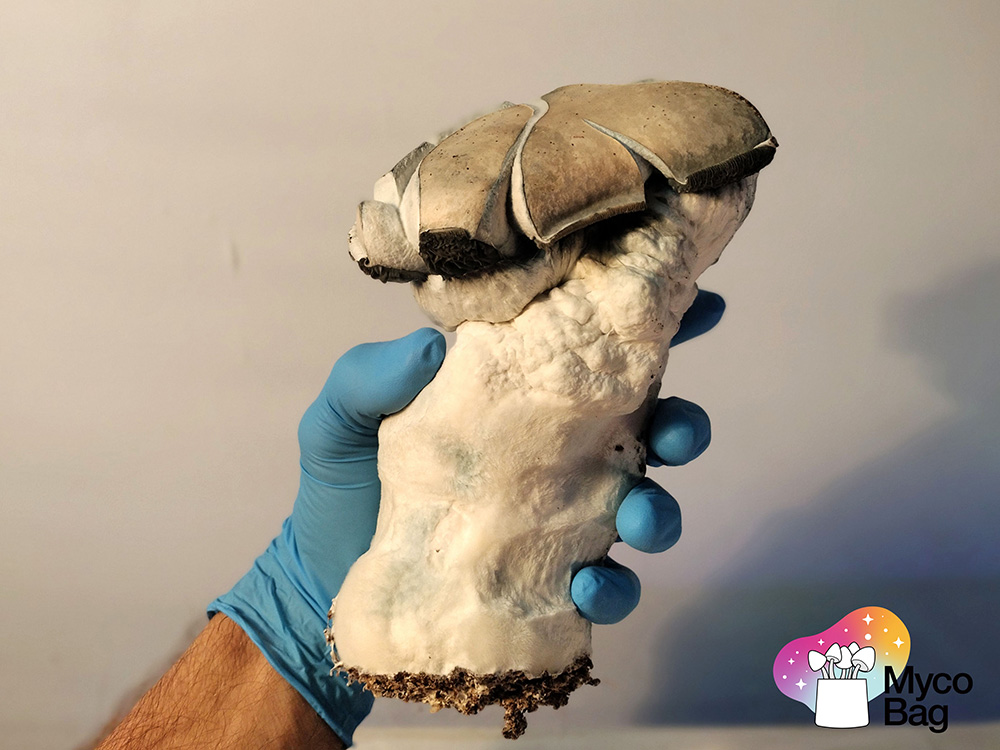
Their dedicated team isolates and stabilizes each lineage through a meticulous “genetic training” process. By restricting oxygen using 0.5 and 0.2-micron filters in their laboratories, they force the mycelium to evolve under controlled hypoxia. Elevated CO2 concentrations act as a significant environmental factor that directly influences cell division and early pileus (cap) expansion. The fungus responds to this stress by creating massive, dense, and highly fibrous fruiting bodies with explosive rhizomorphic colonization.
This translates to unparalleled consistency for your laboratory. Our kits are available in four vigorous varieties, each suited for specific analytical goals:
- Tidal Wave Ape: The undisputed apex of extreme biochemical yield. A direct cross between the Tidal Wave hybrid and the Albino Penis Envy (APE) mutant, it produces heavy, dense albino caps with virtually zero sporulation. Genetically coded for massive tryptamine synthesis—a pathway initiated by L-tryptophan decarboxylation—it is ideal for advanced pharmacological potential studies.
- Cascadian Teacher: Ideal for mapping and consistent studies. It boasts a brutal biological efficiency, yielding between 400g and 600g of fresh, tall, and elegant fruiting bodies per bag. Its highly predictable alkaloid profile makes it the universal choice for baseline mycological research.
- Whitebilly: A sophisticated leucistic isolation of the wild Hillbilly strain, optimized to defy gravity. Its ultra-thick ivory stipes prevent the mushroom from falling over, improving intra-bag airflow and preventing cellular maceration infections. Yields often approach 700g in fresh mass.
- Long Whyte Cloudz: A true albino phylogenetic selection that produces completely translucent and invisible spores. This means immaculate harvests that will never stain the underlying canopy, perfect for visual projects, teaching mycology, and precise analytics free of visual distractions.
Optimizing Your Research Scale: Choosing the Right Format
Research scale dictates the tools required. MycoBag offers two standardized, ready-to-use formats to fit any laboratory, classroom, or controlled space:
- Mini MycoBag (700ml / 400gr): Designed for beginners or limited incubator spaces. Its lower thermal mass allows it to acclimate faster to room temperature, accelerating pin formation (primordia) and completing the cycle in about four weeks with average yields of 150-200g of fresh mushrooms.
- MycoBag Pro (2000ml / 1200gr – 1500gr): Built for higher scale and yield. Its larger water reserve cushions thermal variations and easily supports a second metabolic flush, consistently breaking the 400 to 600g fresh yield barrier.
To further validate your research, we also offer the MycoTest service, an exclusive qualitative tool to objectively analyze the chemical composition of your harvest, adding scientific value to every flush.
Safety Precautions and Responsible Biosafety
Responsible mycological research prioritizes biosafety and regulatory compliance. Implement contamination controls and maintain detailed records of all procedures. Legal frameworks vary significantly, and it is essential to consult local regulations before initiating the cultivation of any specific fungal species.
Scientific References
- Beyer, D. M. (n.d.). Green Mold of Mushrooms. Penn State Extension.
- Centers for Disease Control and Prevention (CDC). (2008). Guideline for Disinfection and Sterilization in Healthcare Facilities.
- Zhang, J., et al. (2020). Comparative Transcriptomics of Flammulina filiformis Suggests a High CO2 Concentration Inhibits Early Pileus Expansion by Decreasing Cell Division Control Pathways. PubMed Central (PMC).
- Blei, F., et al. (2024). Genetic regulation of l-tryptophan metabolism in Psilocybe mexicana supports psilocybin biosynthesis. PubMed Central (PMC).