Microdosing psilocybin means taking very small, sub-perceptual amounts of the compound found in Psilocybe mushrooms on a regular schedule. It has become one of the most talked-about topics in psychedelic culture, with claims ranging from better focus and mood to more creativity.
But what does the science actually say? In this updated guide we review the main controlled studies, the possible risks and the legal situation in Europe. It is an informational overview of published research, not a guide to use or medical advice.

Microdosing usually refers to taking a fraction of a dose that would produce noticeable psychedelic effects, repeated over several weeks. The idea is that the effects should be subtle enough not to interfere with daily life.
The active compound, psilocybin, is converted in the body into psilocin, which acts mainly on serotonin 5-HT2A receptors. If you want to understand the difference between the two molecules, read our article on psilocybin vs psilocin.
Surveys of people who microdose often report improvements in mood, energy, focus and creativity. These reports are valuable, but they have an important limitation: participants know what they are taking and usually expect to feel better. That expectation can, by itself, produce real changes in how people feel. This is known as the placebo or expectancy effect, and it is the main reason scientists insist on placebo-controlled studies.
One of the largest studies, published in eLife, used an original “self-blinding” design in which 191 participants prepared their own capsules, some with the substance and some with placebo, without knowing which they were taking. Participants improved on several psychological measures, but the improvements were similar in the placebo group. The authors concluded that expectations could explain much of the reported benefit. You can read the full study in eLife.
A double-blind, placebo-controlled study published in Translational Psychiatry compared a small amount of dried psilocybin mushrooms with a placebo in 34 participants. The researchers found no clear differences in mood, cognition or creativity compared with placebo, and noted that many participants were able to guess when they had taken the active substance, which can bias results. The publication is available through Tilburg University.

So far, the best-controlled studies have not confirmed the benefits most often attributed to microdosing. That does not mean the research is closed: studies are still small, methods vary and larger clinical trials are under way. But it does mean that many popular claims go further than the current evidence.
It is important not to confuse microdosing with clinical research on psilocybin. Most of the promising findings, for example in treatment-resistant depression, come from studies using a full dose in a supervised medical setting together with psychotherapy, not from microdosing.
Some of this research focuses on neuroplasticity, the brain’s ability to form new connections. We explain those findings in detail in our article on psilocybin and neuroplasticity.
Psilocybin is a controlled substance in most European countries. Since 1 January 2026, the Czech Republic allows its therapeutic use under strict medical conditions, as explained by the Czech National Institute of Mental Health. In other countries the rules differ, so it is essential to check the legislation where you live.
Many people who are interested in microdosing are really looking for more calm, focus and self-awareness. Practices with solid evidence, such as meditation, regular exercise and good sleep, work on those same goals. We explore the connection between mushrooms and contemplative practice in our article on magic mushrooms and meditation.
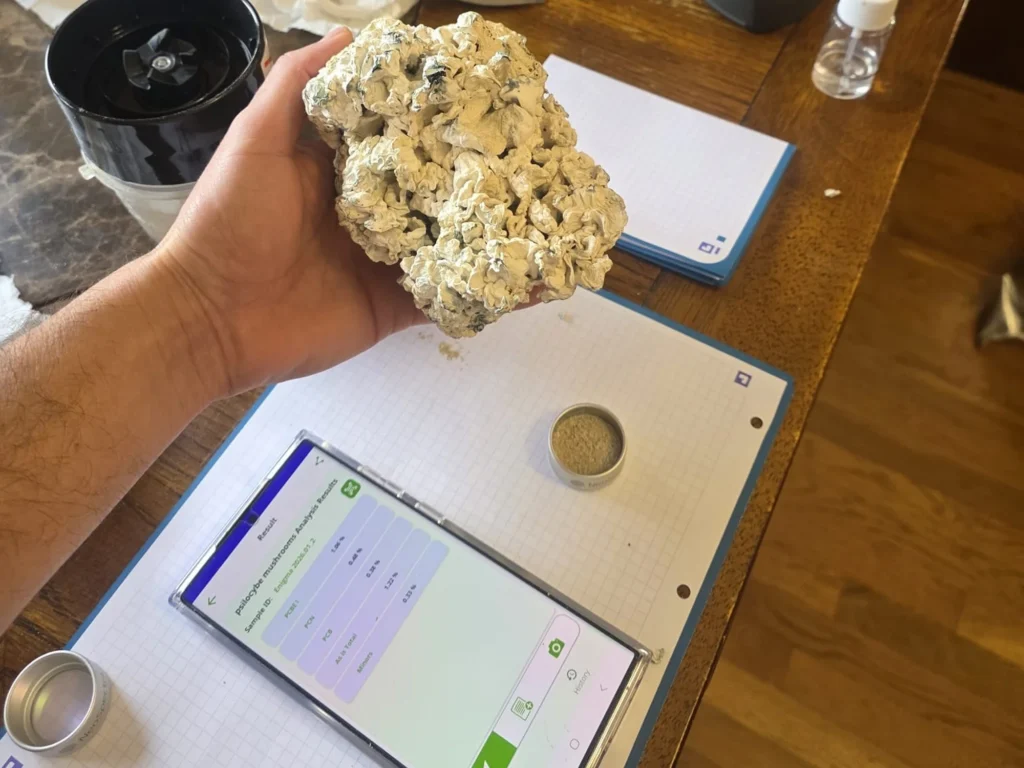
One of the biggest problems in this area is that the content of psilocybin and related compounds is rarely known. That is why we created MycoTest, a laboratory analysis service for mushroom samples, and why we work with documented genetics, which you can explore in our elite mushroom genetics guide.
The best-controlled studies to date have found effects similar to placebo. Self-reported benefits are common, but they may be largely explained by expectations.
Long-term safety has not been well studied. There are theoretical concerns, such as effects on heart valves, and important contraindications for some people.
In most European countries psilocybin is a controlled substance. The Czech Republic allows therapeutic use under medical supervision since 2026.
Clinical research usually uses a full dose in a supervised setting with psychotherapy. Microdosing uses very small, repeated amounts and has much weaker evidence.
This article is for informational and scientific purposes only and does not constitute medical advice. MycoBag does not promote the consumption of mushrooms or controlled substances.