What is microdosing and how does psilocybin work in small doses?
Microdosing psilocybin is the practice of taking about five to ten percent of a full psychedelic dose—usually between 0.1 and 0.3 grams of dried mushrooms, or roughly four times that weight in fresh truffles. At these levels the user should not see visual patterns dancing on the walls or feel reality dissolving. Instead, the experience is described as a barely noticeable lift in mental clarity, a slight brightening of mood, and a gentle push toward sustained attention.
The pharmacology behind those subtle effects is well documented. Psilocybin itself is a pro-drug: once swallowed, it is converted by the gut and liver into psilocin, a partial agonist at several serotonin receptors, most notably 5-HT₂A. High doses of psilocin flood those receptors, scramble large-scale brain networks and generate the vivid phenomenology of a trip. In a microdose, receptor occupancy is low, but modern imaging still detects measurable changes. Functional MRI scans performed at Imperial College London show a modest dampening of the brain’s Default Mode Network—an information hub linked to rumination—alongside a boost in communication between sensory and executive regions. At the cellular level, low-concentration psilocin has been shown to raise brain-derived neurotrophic factor and activate the mTOR pathway, both markers of synaptic growth and neuroplasticity. That biochemical signature helps explain why many microdosers feel mentally “looser,” quicker to form new associations, yet firmly grounded in ordinary consciousness.
Reported benefits: creativity, focus, and emotional balance
Enthusiasts claim a long list of microdosing benefits, but three themes dominate interviews, surveys and the handful of controlled studies published so far.
Creativity. In a 2019 pilot study at Leiden University, volunteers who consumed truffle microdoses produced a significantly higher number of original uses for common objects than they did the week before. While sample sizes were small and the study lacked a strict placebo arm, the result chimed with subjective reports from artists, software developers and product designers who say microdosing psilocybin helps them connect disparate ideas and enter a smooth “flow” state. Electroencephalography during low-dose sessions often reveals short bursts of high-frequency gamma oscillations—the same neural signature repeatedly linked to moments of insight.
Focus and productivity. Knowledge-workers often describe the effect as a clean, caffeine-like lift with no jitters. In 2021, researchers in Maastricht gave 2 milligrams of pure psilocybin to healthy adults in a crossover, double-blind design. Participants showed small but measurable improvements in working-memory accuracy and in the stability of reaction times. Subjectively they reported tasks felt less tedious and procrastination shrank. The effect was modest, yet statistically real, suggesting that tiny doses can sharpen attention in some people.
Emotional balance. The largest naturalistic study to date—a six-week self-tracking project run by Imperial College—followed more than a thousand European and North American microdosers. Average depression scores on the PHQ-9 fell by one fifth, and anxiety scores on the GAD-7 dropped by nearly the same margin. When a hidden placebo arm was introduced partway through, improvements shrank but did not vanish, implying a genuine pharmacological contribution layered on top of expectancy. Participants also logged gains in self-compassion and social connectedness, reinforcing the anecdotal picture of a gentle mood buffer.
It is important to emphasise that the evidence base remains young. Most trials so far involve fewer than fifty volunteers and run for a few weeks. Larger, longer, fully blinded studies are under way, but until they report, any claim of guaranteed benefit should be treated as provisional.
Risks and side effects: what you should know before you start
Psilocybin is biologically active even in tiny quantities, and the very features that make it interesting—serotonergic modulation and neuroplasticity—can pose risks.
Physiological discomfort is the most common issue. Roughly one in ten users experiences a short-lived headache, mild stomach unease or slight increases in heart rate. These symptoms typically fade within two hours and can often be prevented by taking the dose with water, on a light stomach, early in the day.
Sleep disturbance occasionally appears when people dose in the afternoon or evening; serotonergic activation can fragment REM cycles. Morning dosing is the simplest fix.
Tolerance develops quickly because 5-HT₂A receptors down-regulate after repeated stimulation. Continuous daily microdosing soon feels like taking nothing at all. Experienced users therefore adopt schedules with built-in rest days. The best-known is the Fadiman protocol: one dose followed by two days off. Mycologist Paul Stamets suggests five consecutive dosing days followed by two rest days, combined with niacin and lion’s-mane mushroom for added neurotrophic support. Either rhythm prevents tolerance and discourages psychological reliance.
Mental-health vulnerability is a serious concern. People with personal or family histories of psychosis, bipolar disorder or severe anxiety disorders can destabilise even on sub-threshold doses. Screening oneself honestly—and, where possible, consulting a clinician familiar with psychedelics—is essential.
Drug interactions also matter. Psilocin’s serotonergic profile means it could amplify the action of SSRIs, MAOIs or triptan migraine medications, raising the theoretical risk of serotonin syndrome. Although no microdosing cases have been documented, prudence dictates medical supervision if you take serotonergic prescriptions.
Legal consequences vary dramatically across Europe. Psilocybin remains a Schedule I substance under the 1971 UN Convention. Possession penalties range from confiscation and a civil fine in Portugal to multi-year prison sentences in France or the United Kingdom. A clear understanding of local statutes is crucial before obtaining or storing any psilocybin material.
Safe and legal ways to begin a microdosing routine
The first—and often most decisive—step is legal due diligence. In the Netherlands, psilocybin truffles are fully legal for adults and sold in licensed smart shops, each batch tested for microbial safety and alkaloid content. Portugal decriminalises personal possession; police may confiscate your supply but will not prosecute unless trafficking is suspected. Austria allows home cultivation as long as there is no intent to sell, effectively tolerating private use. Spain protects consumption inside a private residence, while commercial distribution remains illegal. In contrast, Germany, France and the UK criminalise all psilocybin-containing fungi once the spores germinate; only dormant spores for microscopy are legal. Because statutes evolve, always verify the current text of national and regional law.
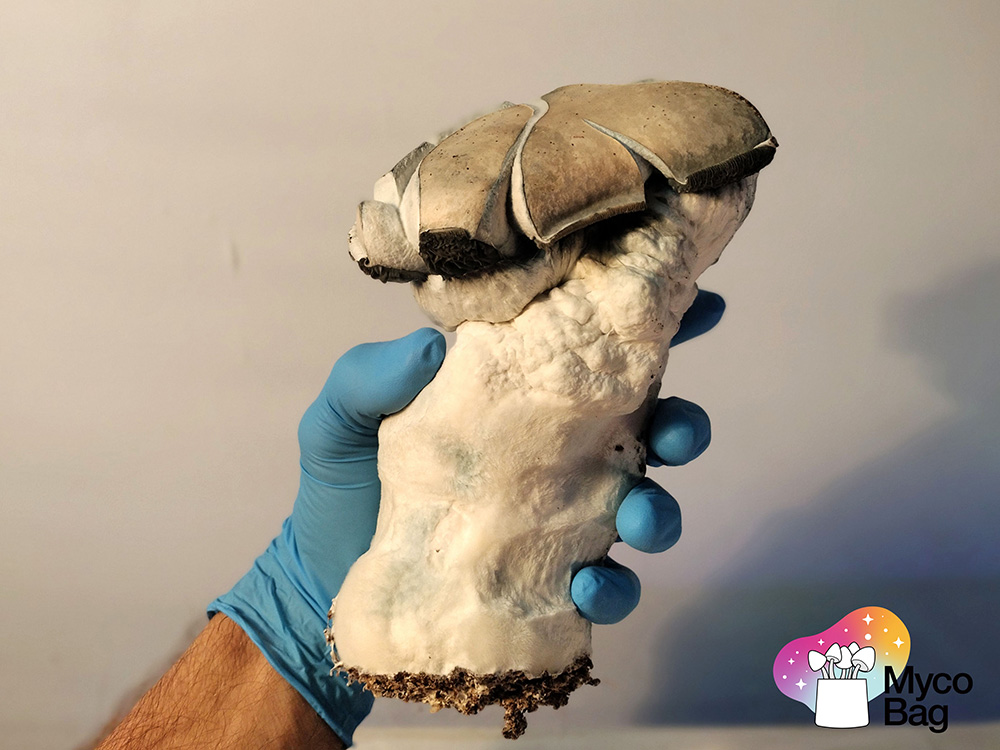
If your jurisdiction permits, the safest material comes from either legal Dutch truffles—standardised, labelled and microbiologically screened—or from sterile grow kits. Companies such as Mycobag produce substrate blocks fully colonised with a known strain of Psilocybe cubensis under clean-room conditions. Growing your own mushrooms from such a kit, where lawful, gives you control over potency and eliminates the bacterial and dosing uncertainties that plague black-market products.
Accurate measurement is non-negotiable. A scale that reads to the milligram ensures a true microdose stays micro. Most beginners start at 0.1 grams of dried mushroom, repeat that amount three times on non-consecutive days, then adjust upward or downward in 50-milligram steps depending on perceived effect. Overshooting can convert a normal workday into an unexpectedly colourful afternoon—hardly the objective of how to microdose safely.
Selecting a protocol with rest days protects both biology and habit formation. Many newcomers adopt Fadiman’s one-day-on, two-days-off rhythm. Others prefer the five-on, two-off cycle popularised by Stamets. What matters is regular time away from the compound to prevent receptor down-regulation and to check whether improvements persist without chemical help.
Finally, embed the practice in a mindset of continuous observation. Keep a simple journal: rate your mood, anxiety, mental clarity, creativity and any physical sensations each dosing and non-dosing day. Record sleep length, exercise, caffeine and alcohol intake. After a month you will have your own data set, small but personalised, to judge whether the microdosing benefits outweigh hassles or side effects.
Closing thoughts
Microdosing psilocybin sits at a fascinating crossroads of neuroscience, mental-health innovation and evolving drug policy. Early data hint at real gains—sharper ideas, steadier focus, lighter mood—achievable without perceptual fireworks or social disruption. Yet those gains are subtle, individual and nested inside a landscape of legal strictness and biological nuance. Proceeding means acting like a citizen-scientist: weighing evidence, measuring carefully, recording diligently and respecting the law. Used responsibly, the practice may open a narrow but significant window onto improved well-being. Used recklessly, it can lead just as easily to legal trouble or psychological imbalance.
Mycobag supports an evidence-based, safety-first approach by supplying sterile cultivation materials where legal and by disseminating up-to-date, scientifically grounded information. If you choose to explore psilocybin microdosing, let precision, caution and continuous learning guide every step. That is the surest path to discover whether this small dose can make a worthwhile difference in your life—and, above all, to ensure you do it safely and within the law.

 Sale!
Sale! Sale!
Sale!