Monotub contamination is one of the most common concerns associated with container-based mushroom cultivation. Green mold, bacterial growth and other unwanted microorganisms can interfere with fungal development, reduce productivity and make experimental observations difficult to interpret.
But the explanation is more complicated than saying that “monotubs fail because the lid is opened”.
A monotub is not inherently defective, and contamination rarely has a single cause. Unwanted microorganisms can originate from the biological material, substrate, preparation process, equipment, handling or surrounding environment.
The real difference between a traditional container and a closed filtered system is therefore how many potential exposure and handling variables the user has to manage.
What is monotub contamination?
Contamination occurs when microorganisms other than the intended fungus become established within the growing environment.
These organisms can include competing fungi, bacteria and yeasts. Some simply compete for nutrients and space, while others can directly damage cultivated fungal tissue or significantly reduce productivity.
One of the best-known examples is Trichoderma, a diverse fungal genus that includes species associated with green mold disease in commercial mushroom production.
Penn State Extension’s guide to green mold documents the impact of Trichoderma in cultivated mushrooms and explains that contamination can be introduced through sources including personnel, equipment and growing material.
This is an important point: visible contamination in a monotub does not prove that the tub itself was the original source.
Do monotubs always have a high contamination risk?
No.
A well-managed monotub can function as a relatively stable cultivation environment. Modern monotub designs can also rely on passive gas exchange rather than constant manual fanning.
For that reason, claiming that all monotubs require continuous lid opening—or that they inevitably become contaminated—is too absolute.
The more accurate criticism is that many DIY container systems involve more independent preparation, transfer and environmental variables than a fully prepared closed system.
Depending on the setup, the user may need to manage the growing medium, biological material, enclosure, atmospheric exchange and other variables separately.
Each stage is another place where variation can enter the process.
Where does mushroom contamination actually come from?
Contamination is best understood as a system-level problem rather than a single event.
A recent scientific review of microbial contamination in cultivated mushrooms describes multiple potential stages at which unwanted microorganisms can enter production, including substrate preparation, propagation material, cultivation, handling and post-production processes.
The review is available through PubMed Central.
For a monotub or any other cultivation format, the main categories of risk include:
- contaminated starting biological material;
- microorganisms already present in the growing medium;
- equipment or enclosure contamination;
- environmental exposure during handling;
- physical damage or loss of enclosure integrity;
- and environmental conditions that favour competing microorganisms.
This explains why simply blaming the lid can lead to the wrong conclusion.
Why Trichoderma is such an important contaminant
Trichoderma is frequently discussed in mushroom cultivation because certain species can compete aggressively within mushroom-growing environments.
Green mold associated with Trichoderma has caused significant productivity losses in commercial mushroom production, including systems involving Agaricus, Pleurotus and shiitake.
Penn State describes characteristic green mold development as initially pale fungal growth followed by green sporulation. Its mushroom disease resources also emphasise the role of hygiene and contamination vectors such as people and equipment.
See Penn State’s fungal disease guide for mushroom farms for further background.
However, not every green or discoloured area should automatically be identified as Trichoderma from appearance alone. Reliable identification depends on the organism and context.
Does opening a monotub cause contamination?
Opening a container increases interaction between the internal environment and the surrounding room, but it is inaccurate to say that lifting a lid automatically contaminates the system.
A fruiting container is also not equivalent to a sterile cleanroom or a sealed laboratory vessel.
What additional handling does create is another opportunity for environmental particles, equipment or human contact to influence the system.
The risk therefore depends on the biological state of the material, the surrounding environment and the way the cultivation system itself is designed.
This distinction matters because it separates a defensible risk-reduction argument from an unsupported claim that one lid opening inevitably destroys sterility.
Airborne contamination is only part of the problem
Many discussions of mushroom grow kit contamination focus almost entirely on airborne mold spores.
Air matters, but it is not the only contamination vector.
Research into commercial mushroom disease management identifies personnel, tools, equipment, substrates, water and other production materials as potential pathways for microbial spread.
In other words, a completely closed enclosure cannot correct contamination that was already present before the enclosure was sealed.
This is why contamination control has to begin with the quality of the complete biological system rather than relying only on the final container.
Why moisture and substrate conditions matter
Microbial competition is strongly influenced by the physical environment.
Water availability, oxygen conditions and substrate structure can all affect which microorganisms are favoured within a growing medium.
Penn State’s research on microbial activity in mushroom substrate explains how factors including moisture, oxygen and physical substrate characteristics influence microbial behaviour.
This means contamination should not always be interpreted as evidence that a mold spore simply “landed on the surface”.
Sometimes the more important question is whether the biological environment favoured the intended fungus or competing organisms.
For more background on the growing medium itself, read our guide to mushroom substrate and how its physical structure matters.
Sterilization does not mean permanent sterility
Another common misconception is that a properly processed substrate remains permanently sterile.
Sterilization describes a microbiological process applied at a particular stage. It does not create permanent immunity from later contamination.
Once processed biological material is exposed to new environments, packaging failures, contaminated tools or other microbial sources, microorganisms may be reintroduced.
This is why statements such as “completely sterile forever” or “zero contamination guaranteed” are scientifically difficult to defend.
A stronger claim is that professional processing combined with reduced handling can reduce the number of contamination opportunities across the complete system.
Why closed filtered systems can reduce exposure
A filtered grow bag approaches the problem differently from a traditional rigid container.
Instead of depending on a repeatedly accessed enclosure, the bag can combine a physical barrier with passive atmospheric exchange.
The microporous filter allows the enclosed biological system to exchange gases with the external environment without requiring the bag itself to function as a permanently open chamber.
That does not make the filter an “absolute barrier” or guarantee that contaminants can never enter.
Its practical advantage is that gas exchange can occur while reducing the need for direct manual exposure.
This is one of the central differences explored in our MycoBag vs Tupper comparison.
Monotub vs closed grow bag
| Factor |
Monotub or rigid container |
Closed filtered grow bag |
| Enclosure |
Rigid container |
Flexible sealed bag |
| Gas exchange |
Depends on tub design |
Passive through integrated filter |
| Access to the internal environment |
Generally easier |
Deliberately more restricted |
| Experimental flexibility |
Higher |
Lower |
| Preparation variables |
Often managed independently by user |
Can be integrated by producer |
| Manual handling |
Depends strongly on configuration |
Can be reduced |
| Contamination risk |
Depends on complete process |
Also depends on complete process |
The most important row is the last one.
No cultivation architecture makes contamination biologically impossible.
The difference lies in the number and type of variables exposed to the user and environment.
Why fewer handling steps can improve repeatability
Contamination prevention is only one reason researchers may prefer a more integrated system.
Reducing handling also improves process standardisation.
If every experiment requires independently preparing and assembling several biological components, differences between batches may reflect those preparation steps rather than the genetic material being studied.
A more defined starting system reduces some of that variation.
For beginners, this primarily means lower complexity.
For more experienced researchers, it can provide a more consistent baseline from which biological differences are observed.
This is a stronger scientific argument for closed systems than simply saying “monotubs fail”.
How MycoBag approaches contamination risk
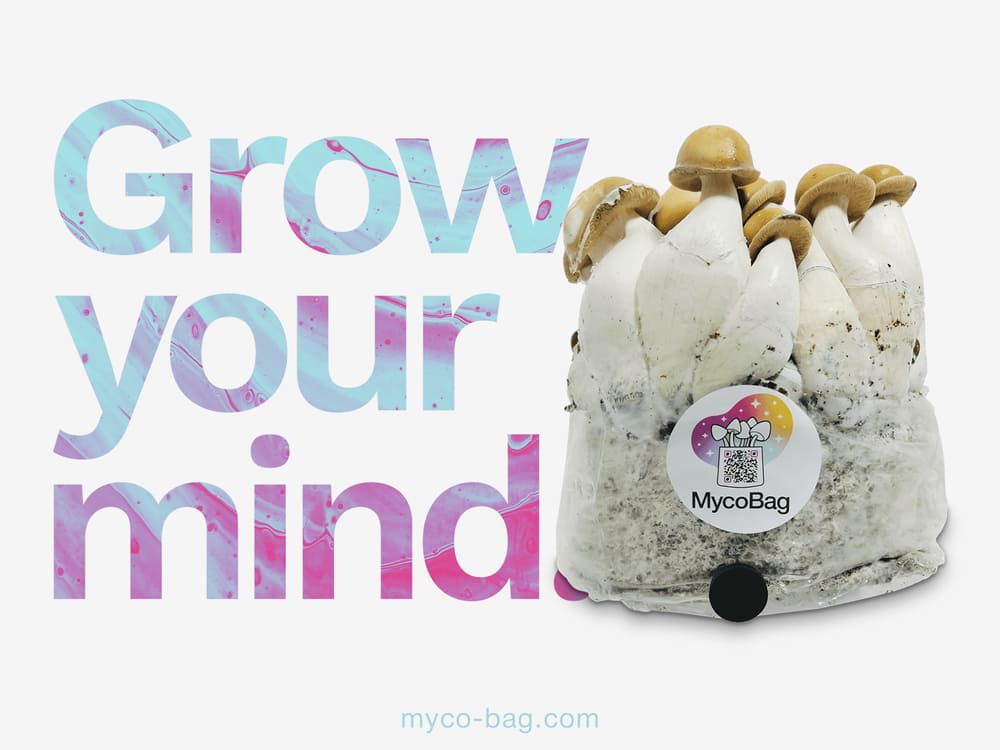
MycoBag is designed around a closed Plug & Play architecture rather than an empty grow bag or a traditional open container.
The current system combines:
- prepared biological material;
- a defined growing medium;
- a sealed enclosure;
- a microporous filter supporting passive gas exchange;
- and reduced need for user handling.
MycoBag also uses controlled steam-autoclave processing during preparation.
The relevant proposition is not that this system guarantees zero contamination. Instead, more of the preparation and environmental-control variables are managed before the product reaches the user.
Once the system is closed, the filtered architecture is designed to reduce the need for repeated direct interaction with its internal environment.
How this differs from an all-in-one grow bag
“Grow bag” is a broad product category.
An empty filter bag, a sterilized substrate bag and an integrated prepared system can all be described using similar terminology despite requiring very different levels of involvement.
This matters when comparing contamination risk because preparation stages that take place outside the final enclosure remain part of the complete microbiological process.
Our guide to all-in-one mushroom grow bags vs traditional kits explains these differences in more detail.
Monotubs are not the enemy
It is tempting to position MycoBag by presenting traditional containers as fundamentally defective.
That is not necessary.
Monotubs can provide significant flexibility and remain useful in contexts where the researcher deliberately wants direct control over the growing environment.
The trade-off is that greater control usually means managing more variables independently.
MycoBag occupies the opposite end of that spectrum: less intervention, greater integration and a more defined starting system.
This creates a more credible comparison:
monotubs prioritise flexibility; closed Plug & Play systems prioritise simplicity and reduced handling.
Can contamination be completely eliminated?
No biological cultivation system can responsibly promise that.
Microorganisms are widespread, biological material varies and contamination can originate at multiple points in a production chain.
A professional contamination-control strategy is therefore based on reducing probability and managing vectors rather than claiming absolute elimination.
This is consistent with commercial mushroom disease management, where hygiene, substrate quality, equipment, personnel and environmental conditions are treated as parts of the same system.
For a broader overview of contamination and other common biological problems, see mushroom growing problems: common mistakes and how to fix them.
Frequently asked questions about monotub contamination
What causes monotub contamination?
Contamination can originate from several sources, including the starting biological material, substrate, equipment, enclosure, handling and surrounding environment. A contaminated monotub does not necessarily mean the container itself was the original source.
Does opening a monotub automatically contaminate it?
No. Opening a container increases environmental interaction, but it does not guarantee contamination. The actual risk depends on the biological material, system design, surrounding microbial load and other process variables.
What is green mold in mushroom cultivation?
Green mold is commonly associated with species of Trichoderma. Certain Trichoderma species are important competitors or pathogens in commercial mushroom production and can significantly reduce productivity.
Is every green patch Trichoderma?
No. Colour alone is not sufficient for definitive microbial identification. Different organisms and biological reactions can produce visual changes, so identification should not rely solely on a photograph or colour description.
Are filtered mushroom grow bags contamination-proof?
No. A filter can reduce direct environmental exposure while allowing gas exchange, but contamination can also originate from material already inside the bag or from problems occurring elsewhere in the production process.
Do microporous filters allow gas exchange?
Yes. Filter patches are used in mushroom cultivation systems to permit passive atmospheric exchange while restricting direct exposure of the growing medium to environmental particles.
Are monotubs worse than grow bags?
Not universally. Monotubs provide greater access and experimental flexibility. Closed grow bags are particularly useful when reduced handling and a more integrated starting environment are the priority.
Does sterilization guarantee no contamination?
No. Sterilization addresses microorganisms present at the time of processing. It does not prevent later reintroduction through handling, damaged packaging or other environmental vectors.
Final thoughts
Monotub contamination is not caused by one universal flaw, and traditional containers do not automatically fail simply because they are opened.
Contamination is a system problem.
The starting biological material, substrate, equipment, surrounding environment and handling process can all influence whether competing microorganisms become established.
This is exactly why closed systems are interesting.
The strongest case for MycoBag is not that it creates an impossible “zero contamination” environment. It is that its closed Plug & Play architecture reduces the number of preparation and handling variables that the user must manage independently.
A prepared growing environment, controlled processing and passive gas exchange through a microporous filter work together to reduce unnecessary exposure while maintaining a more defined biological system.
That is a more accurate—and ultimately more persuasive—advantage than simply claiming that monotubs fail.
Explore the current MycoBag range

 Sale!
Sale! Sale!
Sale!