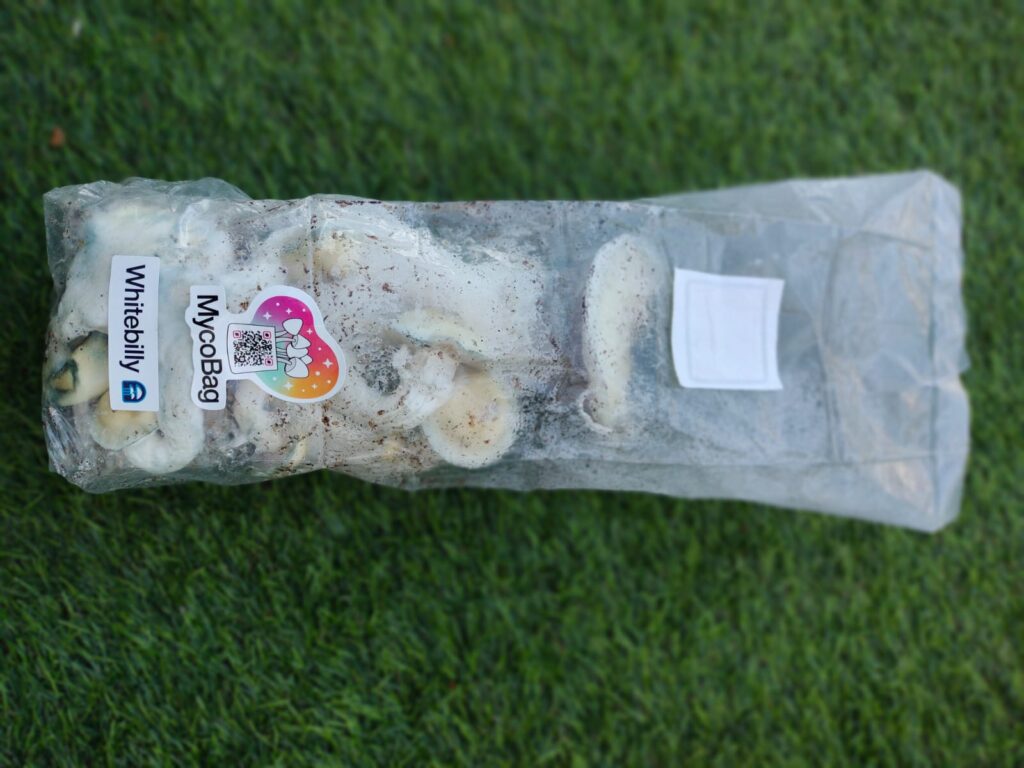
Mushroom growing problems can have many different causes. Contamination, slow or stalled mycelium, unusual colours, excessive moisture and inconsistent development may look similar at first, but they do not always point to the same underlying issue.
The most useful approach is therefore not to guess from a single symptom. Instead, look at the system as a whole: the growing medium, moisture, gas exchange, biological material and the amount of handling involved can all influence what you see.
This guide explains some of the most common mushroom cultivation problems, what their visible signs may indicate and when a problem deserves closer attention.
Quick guide to common mushroom growing problems
| What you notice |
Possible explanation |
What to consider |
| Green or unusual coloured growth |
Possible competing mould |
Contamination should be considered |
| Wet, slimy or discoloured areas |
Possible bacterial activity or excess free moisture |
Check whether the material appears abnormal |
| Very slow development |
Biological or environmental variation |
Consider species, substrate and system conditions |
| Development stops |
Several variables may be involved |
Avoid assuming one cause from appearance alone |
| Uneven development |
Variation in moisture, substrate or biological material |
Evaluate the overall system |
1. Mushroom contamination
Contamination is one of the most recognisable mushroom growing problems because another organism may begin competing with the intended fungal culture.
Green mould is a well-documented example. Penn State Extension describes Trichoderma green mould as a disease capable of producing extensive green sporulation and significant losses in commercial mushroom production.
Possible warning signs include:
- green or distinctly unusual coloured patches;
- rapidly changing areas that do not resemble the expected mycelium;
- unexpected slime or wet-looking tissue;
- strong or unusual odours;
- clear deterioration of otherwise normal development.
Colour alone is not always enough to identify a contaminant. Different organisms and physiological changes can produce different appearances, so visual diagnosis should be treated cautiously.
For a deeper look at one important contaminant, read our guide to Trichoderma and contamination risk.
2. Slow or stalled mycelium
Slow growth does not automatically mean that a project has failed. Fungal development varies according to genetics, species, substrate characteristics and environmental conditions.
However, a clear change from normal development — particularly when accompanied by unusual colours, odours or wet areas — deserves attention.
The growing medium also matters. Nutrition, moisture retention and physical structure can influence fungal development, which is why we explain those variables separately in our guide to choosing a mushroom substrate.
Rather than assuming that slow growth has one universal cause, it is better to consider whether the biological material and growing system are behaving consistently with their documented characteristics.
3. Excess moisture and poor substrate structure
Water is essential to fungal biology, but the physical distribution of moisture also matters. A substrate that becomes excessively wet or compact can contain fewer air spaces.
Penn State research on mushroom substrate management notes that wet, dense material combined with inadequate aeration can contribute to anaerobic conditions and changes in microbial activity.
This illustrates an important principle: moisture, substrate structure and gas exchange should not be considered as completely separate variables.
Visible standing moisture, persistent wet-looking zones or major changes in substrate structure may therefore justify closer inspection rather than being treated as purely cosmetic.
4. Gas exchange problems
Fungal metabolism involves the exchange of oxygen and carbon dioxide. The way a cultivation system manages that exchange can therefore influence its internal environment.
Traditional open-container systems and closed filtered systems approach this problem differently. Open systems generally involve more direct exposure to the surrounding environment, while filtered bags can support passive gas exchange through a membrane or filter patch.
This distinction is one of the main differences discussed in our comparison of all-in-one mushroom grow bags vs traditional kits.
5. No visible development or inconsistent results
When development is absent or inconsistent, it is tempting to search for one simple explanation. In practice, several variables may overlap.
Biological material can differ in vigour. Substrate properties can vary. Environmental conditions can change over time, and unnecessary manipulation can introduce additional variables.
For this reason, a reliable troubleshooting process should distinguish between a visible symptom and a confirmed cause. “Nothing is happening” describes an observation; it does not identify the biological reason behind it.
6. Unnecessary handling
Handling is an often overlooked part of mushroom cultivation problems. Every system has a different design philosophy, but additional intervention generally means introducing additional variables.
This is particularly relevant when comparing traditional multi-stage systems with prepared closed formats.
MycoBag is designed around a closed Plug & Play system with reduced need for manual handling. Its integrated microporous filter supports passive gas exchange while the growing medium remains inside the bag.
The purpose of this design is not to claim that contamination is impossible. Rather, it reduces the number of manual interactions required compared with systems that depend on repeated opening and manipulation.
7. Mistaking a symptom for a diagnosis
One of the most common troubleshooting mistakes is assuming that every unusual appearance has a single explanation.
For example, colour changes can be associated with contamination, but colour alone is not sufficient to identify an organism. Likewise, slow development may reflect several biological or environmental variables rather than one specific fault.
When a culture shows clearly abnormal growth, unexpected odours, extensive discolouration or other signs of deterioration, the safest approach is to treat it as a potential biological contamination issue rather than making assumptions based solely on online photographs.
How MycoBag reduces variables
MycoBag takes a different approach from traditional open-container systems. The Plug & Play format combines a prepared growing medium with a sealed bag and microporous filter designed to support passive gas exchange.
For beginners, the main advantage is simplicity: fewer separate steps and less handling. For experienced users, a closed format can also make the system easier to evaluate because fewer variables are being introduced manually.
Explore the MycoBag system →
Frequently asked questions about mushroom growing problems
Why is my mushroom grow kit not growing?
The most common causes are a temperature outside the species’ range, a substrate that is too wet or too dry, insufficient gas exchange and, less often, contamination. Mycelium also needs time: depending on the species and conditions, visible colonisation can take several weeks. Check one variable at a time and avoid opening the system unnecessarily, as every intervention introduces new risks.
Why are my mushroom pins not growing?
Pins that stall usually point to an environmental limitation rather than a problem with the genetics: humidity that is too low (pins dry out), high CO2 levels from limited fresh air exchange, or temperature fluctuations. A few aborted pins are normal; widespread stalling suggests the fruiting conditions need adjusting.
Why is my mycelium growing so slowly?
Slow colonisation is often linked to low temperature, excess moisture that limits oxygen in the substrate, or a weak or old inoculum. Uneven, patchy growth can also be an early sign of competition from contaminants.
What are the most common mushroom growing problems?
Common problems include contamination, slow or stalled development, excessive moisture, abnormal discolouration and inconsistent growth. The exact cause depends on the species, substrate and cultivation system.
Does green growth always mean contamination?
Green mould can indicate contamination by fungi such as Trichoderma, but visual appearance alone should not be treated as a definitive laboratory identification.
Why can mushroom mycelium grow slowly?
Growth rate can be affected by genetics, species, substrate properties and environmental conditions. Slow development should therefore be evaluated in context rather than assigned automatically to one cause.
Can excess moisture cause problems?
Excess free moisture can alter substrate structure and reduce available air spaces. Moisture, aeration and microbial activity are closely connected within a growing medium.
Can a closed grow bag prevent all contamination?
No cultivation format can responsibly be described as completely immune to contamination. A closed system such as MycoBag is designed to reduce manual handling and environmental exposure while supporting passive gas exchange.
Diagnose the system, not just the symptom
The most important lesson in mushroom troubleshooting is that a visible problem is not always a diagnosis. Contamination, moisture, substrate structure, gas exchange and biological variation can interact.
Understanding those relationships makes it easier to distinguish normal variation from a genuine warning sign — and explains why reducing unnecessary variables is an important part of a consistent mycological system.


 Sale!
Sale! Sale!
Sale! Sale!
Sale!