Search for APE mushroom and you will quickly encounter a mixture of genetics, community history and commercial terminology.
APE stands for Albino Penis Envy, a named cultivated line associated with Psilocybe cubensis. It is widely recognised for its pale appearance and its connection to the broader Penis Envy family, but several claims repeated online about its exact origin, pigmentation and biochemical characteristics are less certain than they first appear.
To understand APE more accurately, it helps to separate four concepts that are often mixed together: species, cultivar, phenotype and genetic lineage.
APE is the common abbreviation for Albino Penis Envy.
It is not a separate mushroom species. APE belongs to Psilocybe cubensis, while Albino Penis Envy is the name used for a cultivated lineage or cultivar within that species.
This distinction matters because names such as APE, Penis Envy, Golden Teacher or Jedi Mind Fuck are widely used to differentiate cultivated lines, but they do not have the same taxonomic status as Psilocybe cubensis itself.
In simple terms:
A recent scientific review of P. cubensis strains highlights the large number of named cultivated lines in circulation while also pointing to important gaps in their formal scientific characterisation. You can read the review through PubMed.
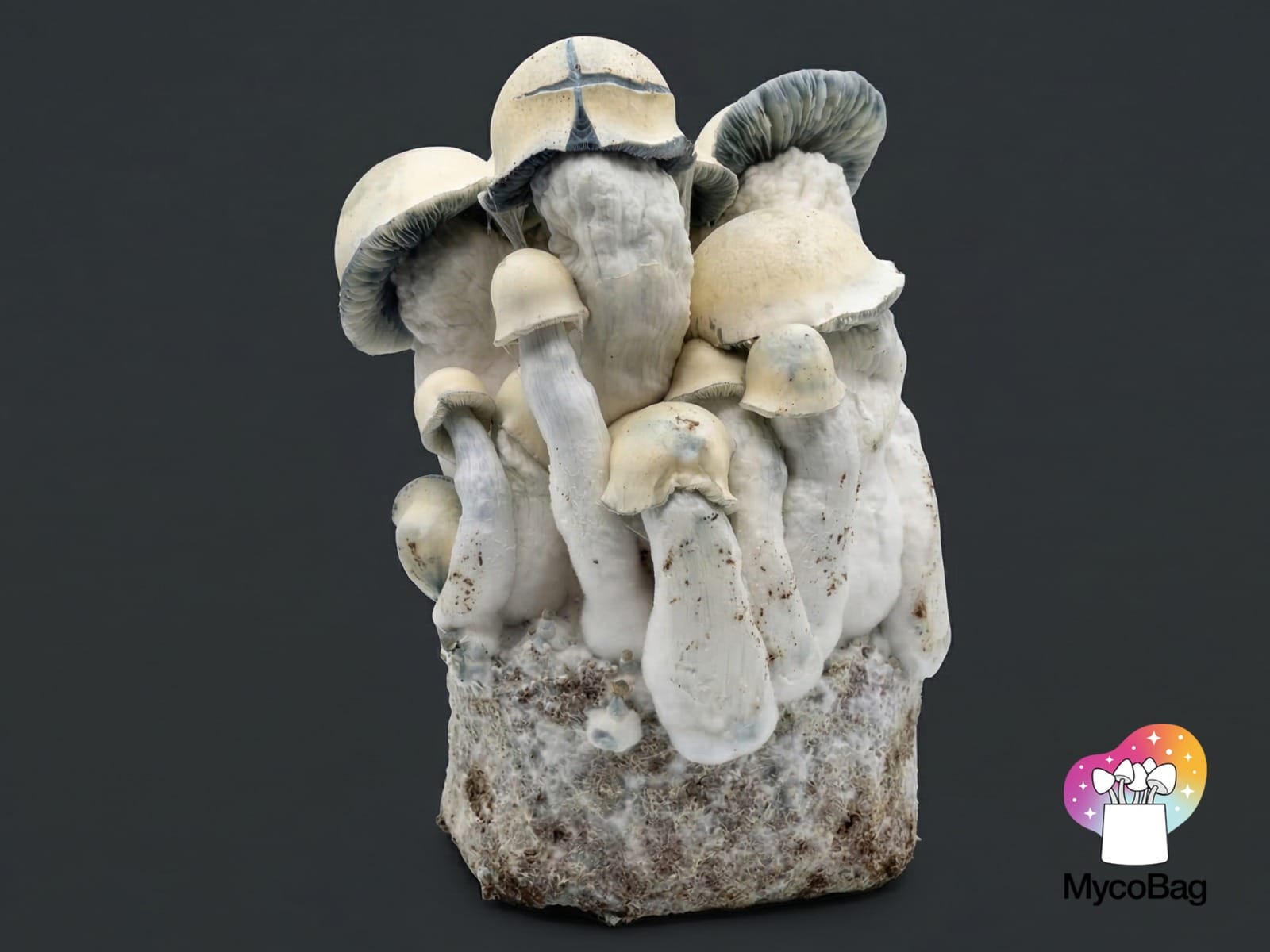
The name combines two characteristics traditionally associated with the cultivar.
Penis Envy refers to the broader cultivated family with which APE is historically associated. Albino refers to its characteristically pale or strongly reduced pigmentation.
However, the terminology deserves some caution.
Online sources frequently alternate between describing pale P. cubensis cultivars as albino or leucistic. These terms are not necessarily biologically interchangeable, and appearance alone does not establish the genetic mechanism responsible for reduced pigmentation.
For that reason, it is more precise to treat Albino Penis Envy as the established cultivar name rather than assuming that the word “albino” proves a specific genetic mechanism.
For a broader explanation of this terminology, see our guide to albino, leucistic, mutant and hybrid mushroom genetics.
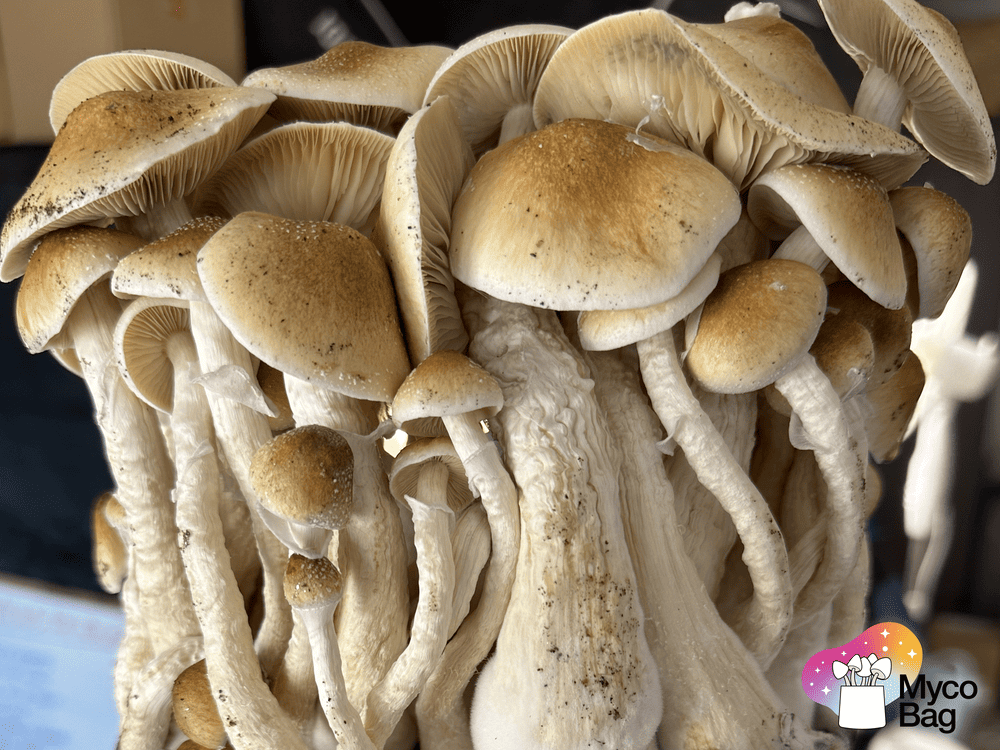
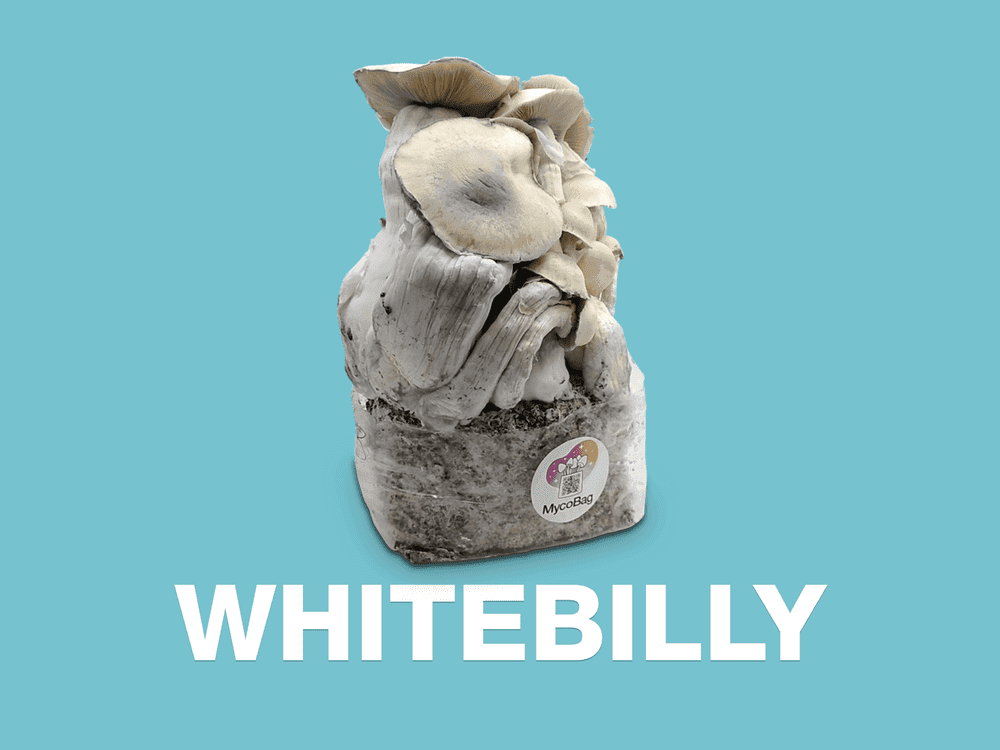
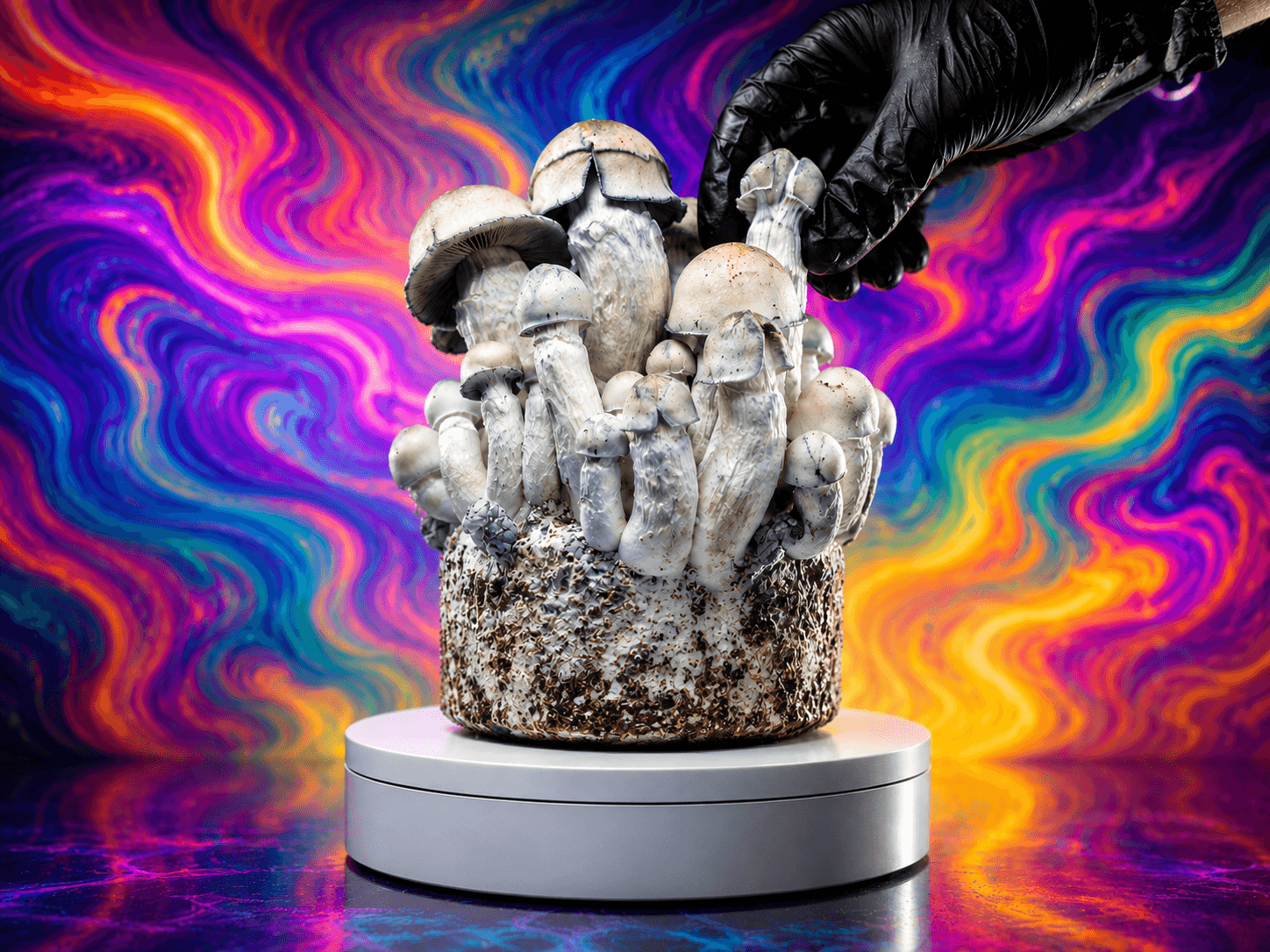
APE mushrooms are commonly associated with pale white, cream or ivory coloration and relatively dense-looking fruiting bodies.
The wider Penis Envy family is often described as having a compact appearance, with relatively thick stems and smaller caps compared with many other named P. cubensis lines.
But morphology should not be treated as a genetic barcode.
The visible characteristics of a mushroom form its phenotype. Phenotype is influenced by genetics, but also by environmental conditions and biological variation.
This means that two specimens carrying the same cultivar name do not necessarily look identical, while two mushrooms with a similar appearance are not automatically genetically identical.
That distinction between genotype and phenotype becomes especially important when discussing heavily selected Psilocybe cubensis cultivars.
No.
Both Albino Penis Envy and Penis Envy are names associated with cultivated lines of Psilocybe cubensis.
The difference exists at the cultivar or lineage level rather than at the species level.
This is worth clarifying because searches such as ape mushroom strain often mix species terminology with cultivar terminology. Describing APE as a separate mushroom species would therefore be inaccurate.
Genomic research also shows that many commercially circulated P. cubensis cultivars are genetically related. A 2023 population-genomics study comparing commercial cultivars with naturalised populations found relatively low genetic diversity across many domesticated lines and substantial relatedness among them. The paper is available through PubMed.
That does not make cultivar names meaningless. It simply means that a commercial name should not automatically be treated as evidence of major taxonomic or genetic separation.
The clearest distinction lies in the named lineage and the phenotype associated with it.
Penis Envy is the broader historical reference, while Albino Penis Envy identifies a distinct cultivated designation associated with strongly reduced pigmentation.
What becomes more difficult is reconstructing a perfectly documented genetic family tree.
Different commercial and community sources provide different versions of how APE was originally developed, selected and stabilised. That means the precise origin should be treated as an attributed history rather than an unquestionable scientific fact unless reliable primary documentation supports it.
This is a recurring issue in mushroom genetics: cultivar names often become widely established before their genetic histories are documented with modern molecular tools.
No reliable scientific rule allows biochemical composition to be predicted simply from pale pigmentation.
Pigmentation and biochemical composition are different biological characteristics.
This distinction matters because APE is frequently discussed online using fixed claims about biochemical strength or potency.
A 2026 controlled study examined 14 named Psilocybe cubensis strains, including Albino Penis Envy and Penis Envy. Despite standardised laboratory conditions, the researchers found substantial differences in total tryptamine concentrations between strains and meaningful variation between individual fruiting bodies from the same strain.
The study reported more than a 7.8-fold difference in total tryptamine concentrations across the strains analysed. The full peer-reviewed paper is available through PubMed Central.
The important conclusion is not that one cultivar name guarantees a specific result. It is the opposite: genetics matter, but cultivar name and appearance alone cannot guarantee a fixed biochemical profile.
APE is particularly interesting because it illustrates several broader questions surrounding modern mushroom genetics.
A cultivar can develop a very strong identity while still having a complicated or partially documented genetic history.
A visible phenotype can become part of the cultivar name without fully explaining the underlying genotype.
And a biochemical reputation can circulate commercially long before enough controlled research exists to define it precisely.
These issues are not unique to Albino Penis Envy. They are part of the broader challenge of describing selected P. cubensis genetics accurately.
For readers comparing cultivars, it is useful to keep four concepts separate:
They are connected, but they are not interchangeable.
No. Albino Penis Envy and Tidal Wave Ape are separate cultivar names and should not be used interchangeably.
The shared APE terminology can easily create confusion, particularly for someone searching for information about APE mushrooms who encounters material about Tidal Wave Ape.
Within MycoBag, Tidal Wave Ape is treated as its own genetic line with dedicated documentation and a separate product identity.
For the cultivar specifically available through MycoBag, read our Tidal Wave Ape genetics guide.
If you are looking for the current MycoBag format associated with that genetics line, see the Tidal Wave Ape MycoBag.
Albino Penis Envy itself should not be confused with the currently available Tidal Wave Ape product.
These terms describe different characteristics and should not automatically be treated as synonyms.
These words relate to pigmentation, although they describe different biological phenomena. In commercial mushroom naming, they are sometimes used less precisely than they would be in formal biological terminology.
A phenotype is the set of observable characteristics expressed by an organism.
Colour, cap shape, stem proportions and other visible characteristics can all form part of a phenotype.
A cultivar or cultivated lineage refers to genetic material that has been selected, maintained or propagated for particular characteristics.
The word “strain” is widely used in commercial and hobby mycology, including in searches such as APE mushroom strain.
However, the term is not always used with the same level of genetic precision in commercial contexts as it would be in microbiology or genetics.
For SEO and general communication, “strain” remains useful because it reflects how people search. In more technical writing, cultivar, lineage, isolation or phenotype may sometimes describe the subject more accurately.
Albino Penis Envy has begun to appear directly in peer-reviewed research involving cultivated Psilocybe cubensis lines.
The 2026 biochemical study mentioned above included Albino Penis Envy among the 14 strains analysed and confirmed the material as P. cubensis using ITS sequencing.
Researchers also noted an important limitation that applies to modern cultivar research more generally: there is no comprehensive genetic reference database covering all commercially circulated strain names.
That limitation matters because phenotype, declared cultivar name and genetic identity cannot always be treated as perfectly interchangeable.
Scientific work therefore gives us a stronger framework for discussing APE, while also showing why uncertainty should be stated clearly when lineage documentation is incomplete.
APE also provides a useful example of how mushroom names evolve.
Some cultivar names describe appearance. Others reference an alleged parent lineage, a breeder, a location or a selected phenotype. Over time, these names can become widely recognised even when different genetic lines are circulating under similar labels.
This means two samples carrying the same broad cultivar name are not necessarily genetically identical unless their provenance and isolation history are documented.
For experienced researchers, provenance therefore matters alongside the name itself.
For readers new to mushroom genetics, the key takeaway is simpler: the name identifies the cultivated family being referenced, but it does not provide a complete genetic analysis by itself.
Albino Penis Envy has become an important reference point in discussions of modern Psilocybe cubensis selection because APE-related terminology appears in the names and histories of other cultivated lines.
That does not mean every cultivar containing “APE” is the same as Albino Penis Envy.
Names should instead be evaluated alongside documented parentage, provenance, phenotype and available genetic or laboratory evidence.
This is particularly relevant when comparing APE with Tidal Wave Ape, where similar terminology can hide important differences between distinct cultivar names.
For a broader explanation of how these naming categories work, our mushroom genetics guide covers albino, leucistic, mutant and hybrid terminology in more detail.
APE stands for Albino Penis Envy, a named cultivated line associated with the species Psilocybe cubensis.
No. APE is a cultivar or lineage name. The species is Psilocybe cubensis.
They are associated with the same broader cultivated family, but they should not be treated as identical cultivar names. APE is particularly associated with a strongly pigment-reduced phenotype.
Albino Penis Envy is the established cultivar name. However, commercial and community sources are not always consistent when distinguishing albinism from leucism in pale mushroom genetics. The name alone should therefore not be treated as proof of a specific pigmentation mechanism.
No. Controlled research shows meaningful biochemical variability both between Psilocybe cubensis strains and between individual fruiting bodies from the same strain. A cultivar name therefore cannot guarantee a fixed chemical composition.
No. Albino Penis Envy and Tidal Wave Ape are separate named genetic lines. MycoBag currently offers Tidal Wave Ape as a distinct cultivar.
No. Albino Penis Envy and Albino Jedi Mind Fuck are separate cultivar names and should not be grouped together simply because both names refer to pale or albino-associated phenotypes.
APE is interesting because it sits at the intersection of morphology, selective breeding, commercial naming and increasingly detailed scientific research.
It also demonstrates why mushroom genetics should not be reduced to reputation or appearance alone.
A cultivar name can provide useful context, but the strongest documentation comes from combining provenance, morphology, laboratory evidence and genetic data where those sources are available.
As scientific research into cultivated Psilocybe cubensis expands, some long-standing assumptions about familiar cultivar names may become clearer, while others may need to be revised.
The most useful principle is therefore simple: a cultivar name is the beginning of the investigation, not the conclusion.
Continue with our Tidal Wave Ape genetics guide, explore the broader mushroom genetics guide, or view the current Tidal Wave Ape MycoBag.
 Sale!
Sale!