At MycoBag, we are connecting cultivation records with analytical measurements. Full Canopy Genetics and Valenveras are working together to understand how mushroom samples differ in yield and chemical composition, with Hydra among the varieties represented in the current MycoBag catalogue.
The work reaches back to our first mushroom readings in Denver, Colorado, in 2023. Alongside Santiago Ongay of Full Canopy Genetics and other collaborators, we have been exploring how portable analysis can bring more information into mushroom research.
The aim is to make the research behind these varieties easier to examine. A useful result includes what was measured, how it was measured and how much confidence the evidence supports.
A trained eye can recognise differences in mushroom shape, growth and harvest performance. Those observations remain valuable, but appearance alone cannot establish chemical composition.
Recorded yield and analytical results answer different questions.
Two harvests can weigh much the same and have different chemical profiles. Their results become more meaningful when the sample details and measurement methods are recorded alongside them.
In the analytical workflow described for this research,
the system combines optical hardware with analytical models developed by Valenveras. The hardware captures an optical signal; the analytical model gives that signal meaning that researchers can interpret and record.
FT-NIR stands for Fourier-transform near-infrared spectroscopy.
An instrument illuminates a sample and records its response to near-infrared light. The resulting spectrum contains overlapping signals associated with the sample’s composition and physical properties.
Chemometric models, trained against reference laboratory results, use those patterns to estimate defined chemical characteristics.
The optical scan can be rapid and non-destructive.
Its usefulness depends on an appropriate sample-preparation method and a model matched to the material being analysed. That combination can make analytical information practical to collect more regularly.
A quantitative NIR model depends on the quality of its reference measurements and on validation with samples it has not already learned from. Useful performance information includes the compounds covered, the concentration range and the error observed
when predictions are compared with an appropriate reference method.
For mushroom research, those checks need to apply to mushroom samples and to the specific analytical model in use. Rapid screening can provide a practical first view, while reference laboratory analysis can support validation and confirmation. The two approaches can play complementary roles.
Full Canopy Genetics contributes mycological research and variety development associated with MycoBag. Its collaboration with Valenveras adds analytical records to observations gathered during that work.
The value comes from connecting each result to its context. A sample label, a recorded harvest and an analytical result need to refer to the same material before they can support a meaningful comparison.
Over time, a well-documented research record can make findings easier to review. It can also show where an apparent pattern still needs independent confirmation.
The programme’s initial charts bring recorded yields and analytical results into one view. These visual summaries use approximate positions and provide a broad picture of the observations. They are best read as an introduction to the research, with precise comparisons reserved for the verified underlying records.
In the yield-versus-potency chart, “potency” is labelled as total alkaloids on an as-is basis. This is the reported concentration in the sample as analysed, rather than psilocybin alone. The yield axis uses ounces per unit per harvest. Those labels matter because comparisons depend on common definitions and consistent measurement bases.
The displayed points cover several combinations of recorded yield and concentration. Their arrangement does not, by itself, establish the strength of the relationship between those measurements
or demonstrate that a trade-off is absent.
Hydra appears toward the upper-right area of this illustration, alongside a small number of other entries. That position is an observation within this dataset, rather than a guarantee of how individual MycoBag samples will perform.
The bubble sizes represent recorded harvest counts. A larger bubble does not automatically mean a more accurate or stable result:
repeated scans, multiple samples from one harvest and independent harvests represent different forms of evidence. Uncertainty also depends on variability and the analytical method.
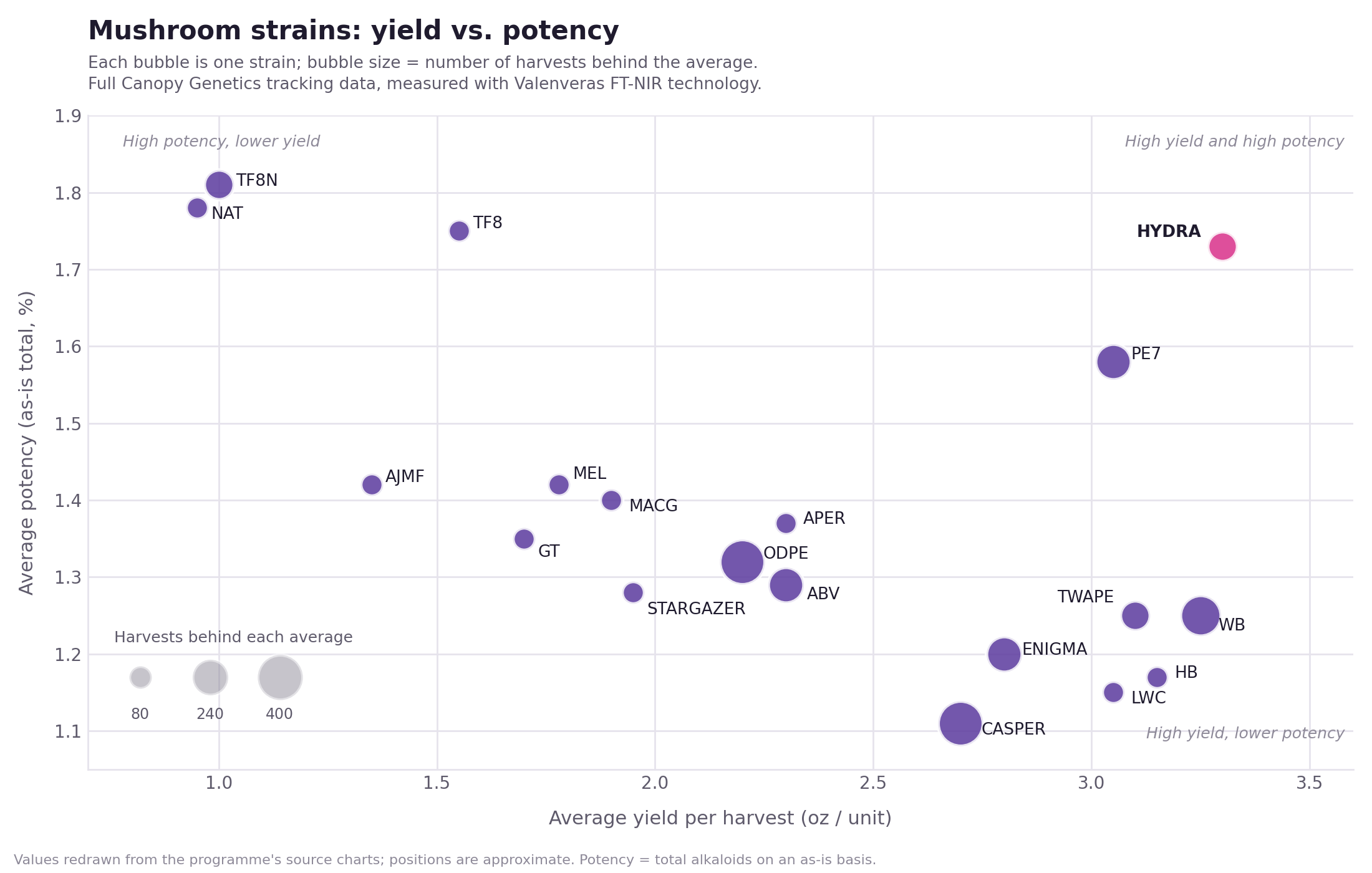
Figure 1. Yield versus reported total alkaloid concentration.
The displayed positions are approximate and should not be interpreted as guaranteed performance values.
The second chart looks at the spread of reported concentrations.
Its legend describes each box as the middle 50% of the results,
with a line marking the median and whiskers showing the reported range. This adds information that an average alone would hide.
The “Medium”, “High” and “Ultra-High” lines are internal reference labels. They describe categories used within the programme rather than recognised scientific or safety standards.
Hydra 2026 has a comparatively compact box in the supplied illustration. This suggests a narrower spread among the displayed observations; it does not by itself establish genetic stability or repeatability across different settings.
The chart also includes entries labelled as caps and stems, as well as names with different year labels. These are not automatically equivalent groups. Sample type and cohort need to remain visible when interpreting the results.
A single observation cannot demonstrate consistency. Even a narrow distribution needs an independent sample count and an explanation of how the observations were collected before readers can judge how widely the result may apply.
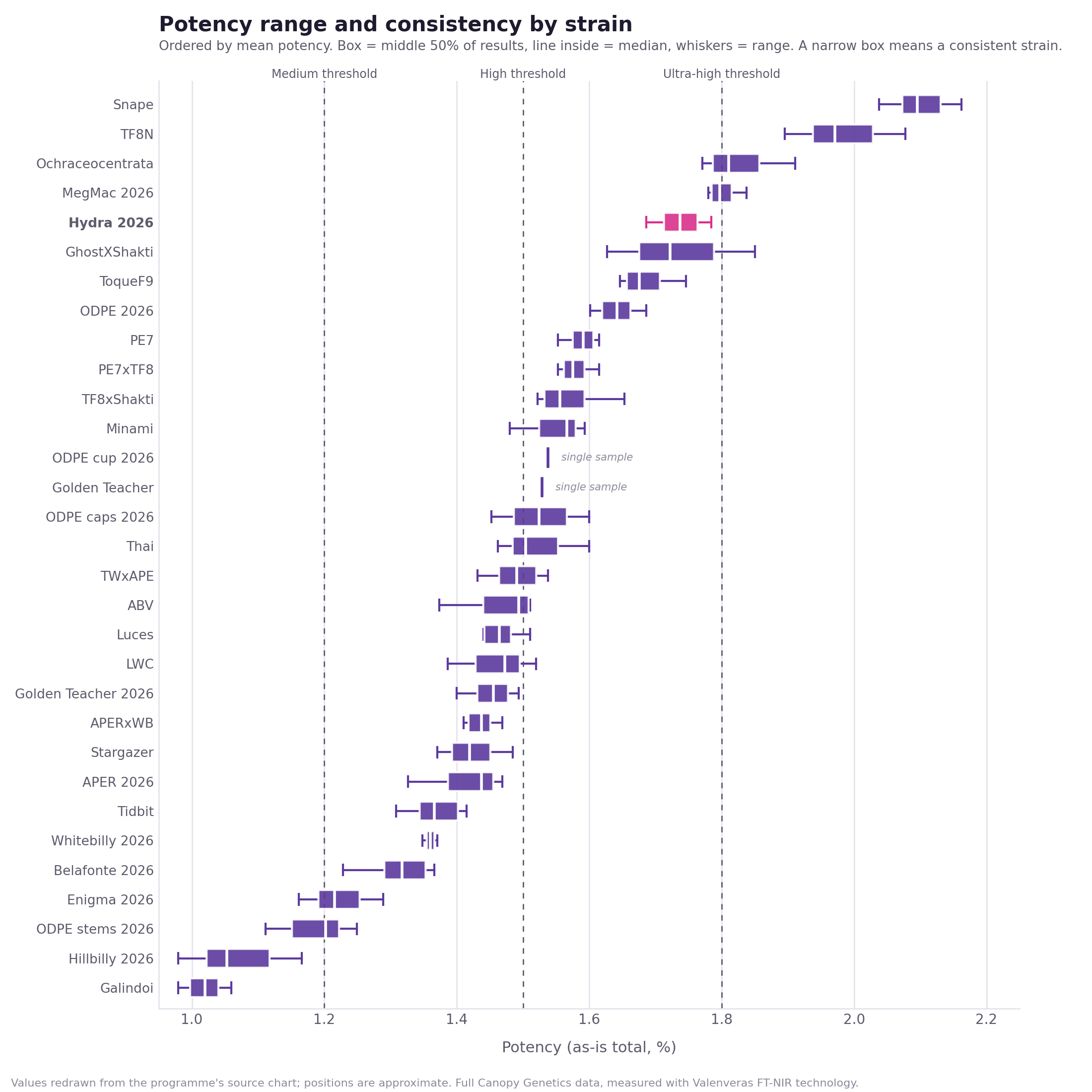
Figure 2. Distribution of reported total alkaloid concentrations.
Boxes summarise recorded observations and should not be interpreted as proof of genetic stability.
These are observational summaries. Genetics, environment, sampling and measurement can all contribute to the patterns shown. Separating those effects requires more evidence than the figures alone provide.
Their immediate value is to make the evidence easier to discuss. They show why an average needs context and why a promising observation should be distinguishable from a result that has been independently confirmed.
Hydra is part of the current MycoBag catalogue and is also represented in the research records discussed here. That makes it a useful example of the questions this collaboration is exploring.
For us, Hydra is an opportunity to make this research more visible.
As the research develops, we want readers to understand the questions behind the variety, how its measurements were assessed and which findings have been confirmed.
MycoBag is also continuing to document further varieties. The opportunity is to give each one a clear research story, with claims that reflect the available evidence rather than turning preliminary observations into guarantees.
Ruben Valenzuela Moreno is an agricultural, industrial and design engineer and co-founder of MycoBag and Valenveras. His work connects mycological research with analytical technology. This article describes a collaboration in which he is directly involved.
 Sale!
Sale! Sale!
Sale!