The term “monguis” is undoubtedly one of the most popular and colloquial expressions in Spain used to refer to psilocybe mushrooms. However, behind this traditional street name lies a fascinating biological and scientific universe that is entirely revolutionizing modern mycology, neuroscience, and the clinical study of human consciousness.
Whether you are driven by pure scientific curiosity, an interest in fungal taxonomy, or the booming trend of psilocybin microdosing for cognitive performance, understanding what monguis are, how they act on a chemical level, and what current science says about them is the mandatory first step to entering this field safely and professionally.
Professional Mycological Standardization
Rigorous research requires absolute biochemical precision. If you are looking to analyze the development of specimens without the instability of wild foraging, explore our advanced solutions in the official MycoBag shop.
1. Origin of the Term and Biological Definition: What exactly are monguis?
Under the colloquial umbrella of “monguis,” several mushroom species are grouped together. But in the realm of experimental mycology and clinical study, we are primarily referring to two key species of psilocybe mushrooms:
- Psilocybe semilanceata (widely known as the Liberty Cap): This is a small, fragile, and slender mushroom that grows wild in damp grasslands and areas rich in decaying organic matter across Europe (being exceptionally common in the northern regions of Spain during autumn). It is visually identified by its characteristic bell-shaped cap that culminates in a prominent nipple or papilla at the top.
- Psilocybe cubensis: This is the most famous, robust, and internationally studied species. Its morphology allows it to generate much larger fruiting bodies and higher biomass. Due to its viability, environmental resistance, and reliable consistency, it forms the foundation of the genetics most heavily utilized in laboratories and mycological studies worldwide.
One of the most distinctive and fascinating taxonomic traits of these monguis is the process known as “bruising.” This is an immediate chemical oxidation reaction that occurs when the cellular tissue of the mushroom is damaged or handled, dyeing the stem or cap an intense indigo blue. This rapid color change is a direct visual indicator of the presence of active alkaloids within the specimen.
2. The Science of Psilocybin: From Albert Hofmann to Neuroplasticity
The scientific interest in monguis has deep historical roots. In 1958, the renowned Swiss chemist Albert Hofmann (famous for synthesizing LSD) successfully isolated the main active components of these mushrooms for the very first time: psilocybin and its highly unstable derivative, psilocin.
On a neurological level, the mechanism of action of these compounds is extraordinary. They possess a molecular structure that is biologically homologous to human serotonin. This structural similarity allows them to bind directly and with high affinity to the 5-HT2A receptors in the cerebral cortex. By doing so, they temporarily modulate the functioning of the Default Mode Network (DMN)—the brain system heavily associated with the ego, thought rumination, and hyper-self-reflection.
Contemporary Phase II and III clinical trials conducted by leading institutions suggest that this interaction induces states of high neuroplasticity. In simple terms, it allows areas of the brain that do not normally communicate with each other to form entirely new neural connections, opening up revolutionary therapeutic pathways for treating treatment-resistant depression, severe anxiety, and improving cognitive flexibility.
3. Psilocybin Microdosing and Monguis: Performance, Creativity, and Focus
Beyond the macroscopic doses used in clinical, assisted settings, one of the main reasons the global interest in monguis has skyrocketed exponentially is the practice of psilocybin microdosing.
This practice involves the scheduled administration of strictly sub-perceptual doses of psilocybin (typically ranging from 0.1g to 0.3g of dried fungal material). Because the amount is so minute, psilocybin microdosing does not alter visual perception, does not generate hallucinations, and does not interrupt the individual’s daily work or social routine.
Following structured protocols designed by experts, researchers have documented the following benefits through self-reporting studies and long-term tracking:
- The Fadiman Protocol (1 day on, 2 days off): Specifically designed to prevent the rapid buildup of tolerance in brain receptors. Users consistently report a notable expansion in divergent thinking, optimizing complex problem-solving skills, and boosting overall creativity.
- The Stamets Stack: This method combines the microdose with Lion’s Mane mushroom and Niacin (Vitamin B3). This specific approach seeks to maximize neurogenesis and promote the expression of Brain-Derived Neurotrophic Factor (BDNF), improving long-term memory and repairing nerve tissue.
- Deep Emotional Regulation: Studies show a statistically significant reduction in subclinical levels of daily stress, mental fatigue, and symptoms of social anxiety.
4. The Cultivation Challenge: Why Real Research Demands Sterile Environments
Although wild monguis like Psilocybe semilanceata can be found in nature, foraging presents unacceptable risks for serious research: from the dangerous misidentification with highly toxic species (such as Galerina marginata) to the chaotic and unpredictable fluctuation in alkaloid concentration from one mushroom to the next.
To obtain repeatable results, measure doses with absolute millimeter precision, and conduct viable studies, modern mycology relies exclusively on indoor cultivation using sterile systems. However, traditional home-based methods (such as open plastic containers or “monotubs”) usually have a failure rate exceeding 50% for beginners due to aggressive contamination by competing fungi, especially the devastating green mold (Trichoderma).
To definitively solve this severe bottleneck in mycological research, at MycoBag we have designed 100% hermetic cultivation systems that are sterilized in medical-grade autoclaves. These closed ecosystems completely eliminate vectors of external contamination, guaranteeing the optimal development of the mycelium and allowing researchers to focus entirely on observation, not on constant sterilization.
Elite Genetics for Biochemical Consistency
Through our rigorous scientific collaboration with Full Canopy Genetics, we offer stabilized strains that ensure a highly predictable biological profile, which is fundamental for maintaining standardization in any study regarding monguis and psilocybe mushrooms:
- Albino Jedi Mind Fuck: A legendary albino mutation in the sector, highly valued for its aggressive substrate colonization speed and exceptional biochemical consistency. It is ideal for prolonged studies requiring phenotypic stability.
- Tidal Wave Ape: An advanced hybrid that stands out for its massive biological density and extremely low sporulation. It is perfect for studies demanding a very high concentration of tryptamines in vastly reduced biomass volumes.
- Cascadian Teacher: A classic, noble, and extremely robust strain that powerfully withstands temperature variations. It is widely considered the gold standard for establishing comparative baselines in modern mycological research.
- Whitebilly: A fascinating leucistic variant that stands out for its totally unique morphology, producing thick, dense stems and an incredibly abundant overall biomass yield.
5. Frequently Asked Questions about Monguis (FAQ)
Is it legal to research monguis in Spain?
In Spain, private cultivation in closed spaces aimed exclusively at personal mycological study, microscopic observation, and non-commercial use exists in a decriminalized legal gray area. However, the sale of fruiting bodies for consumption is strictly prohibited. Legal regulations vary considerably between European countries, so it is always highly recommended to consult current local legislation before initiating any project with monguis.
What is the fundamental difference between monguis and magic truffles?
“Monguis” refer to the visible, aerial fruiting body of the mushroom (the mushroom itself), which emerges when humidity and temperature conditions are perfectly aligned. Conversely, truffles (technically called sclerotia) are dense masses of compacted mycelium that grow underground. They act as a nutrient reserve for the fungus to survive droughts or harsh winters. Both structures contain active compounds, but their developmental cycles and harvesting methods are entirely different.
Why is thermal sterilization crucial in mushroom studies?
The grain-rich substrates and nutrients necessary for the mushroom’s robust development are also the perfect food for millions of ambient bacteria and mold spores floating in the air of any standard home. If the cultivation environment is not properly sterilized under high pressure and temperature, these aggressive contaminants will grow much faster than the studied fungus, ruining the project. Hence the critical importance of using pre-sterilized “Plug & Play” hermetic bags.
Take Your Research to the Next Technological Level
The comprehensive study of psilocybe mushrooms opens a direct window into the immediate future of modern neuroscience, psychiatry, and applied mycology. To ensure a safe, clean, and totally contaminant-free analysis, it is essential to abandon outdated home methods and rely on tools that offer a true professional and laboratory-grade standard.
Do you have any doubts about which substrate format or genetic strain best adapts to the specific environmental and thermal parameters of your study space? Our specialized technical team is at your full disposal to advise you step by step throughout your project.
Do you want to master the secrets of advanced mycology?
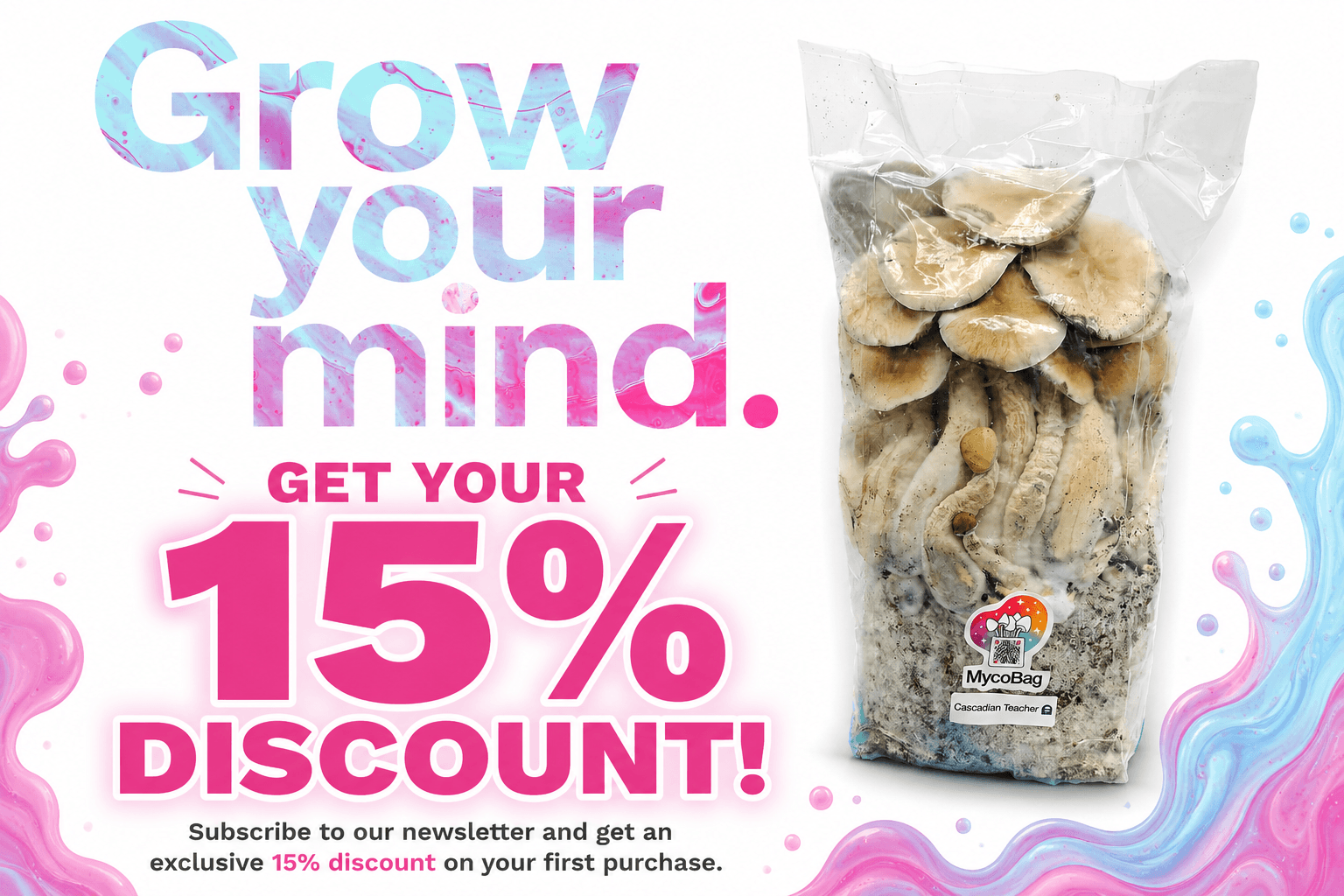
Join the Mycobag newsletter. You will receive exclusive technical guides, proven contamination prevention protocols, incubation tips, and the latest scientific updates directly in your inbox to learn more about monguis and specialized cultivation.

 Sale!
Sale! Sale!
Sale!