Drying magic mushrooms is often discussed as if there were one perfect method capable of preserving every characteristic of a fresh specimen. The science is more nuanced.
After harvest, fungal tissue continues to change. Moisture, oxygen, temperature, light, physical damage and time can all influence the chemical profile eventually measured in a sample. Research on Psilocybe cubensis confirms that processing and storage conditions can affect the stability of psilocybin, psilocin and related tryptamines.
For scientific purposes, the important question is therefore not which drying technique promises “maximum potency”, but what happens to fungal chemistry after harvest.
Why moisture matters after harvest
Fresh mushroom fruiting bodies contain a large proportion of water. While that moisture is part of normal fungal biology, after harvest it also allows enzymatic and microbial processes to continue.
Reducing water changes the biological environment inside the tissue. Many microbial and chemical processes become more limited, which is why dried fungal biomass is commonly easier to preserve and compare as research material.
However, drying is itself a processing step. The chemical composition measured after processing should not automatically be assumed to be identical to that of the original fresh specimen.
Psilocybin and psilocin are chemically different
Discussions about mushroom “potency” often treat psilocybin and psilocin as though they were interchangeable. They are not.
Psilocybin is a phosphorylated tryptamine, while psilocin is its dephosphorylated analogue. They have different chemical properties, and fungal tissue can also contain other related tryptamines.
A study published in Drug Testing and Analysis examined psilocybin, psilocin and several related compounds in Psilocybe cubensis under different processing and storage conditions. The concentrations measured changed according to how the samples had been handled and stored.
The useful conclusion is simple: the post-harvest chemical profile is not necessarily static.
Does blueing mean higher potency?
No. Blueing is one of the most visible characteristics associated with some psilocybin-containing fungi, but it is frequently overinterpreted.
Physical damage to fungal tissue can trigger chemical reactions involving psilocybin-related compounds and lead to the formation of blue pigments.
That makes blueing an interesting chemical and biological response. It does not make colour intensity a quantitative test of psilocybin or psilocin concentration.
A dark blue specimen should therefore not automatically be described as more potent than a specimen that shows less visible colour change.
Temperature is only one part of stability
Older discussions about drying often reduce alkaloid stability to a single variable: heat.
Laboratory research suggests a more complex picture. Temperature can matter, but so can exposure time, moisture, oxygen, physical disruption and the condition of the biological material.
Looking at temperature in isolation therefore risks oversimplifying the chemistry.
For research and analytical comparison, what matters is understanding the complete history of the sample rather than assuming that one processing variable determines the final result.
Why fresh and processed samples are not directly equivalent
Processing a biological sample changes more than its water content.
Once fungal tissue has been harvested, damaged, dried or otherwise processed, chemical reactions may continue or slow at different rates. As a result, a laboratory value obtained from a processed sample describes that sample under those particular conditions.
This is especially important when comparing cultivars. Meaningful comparisons require context around sample preparation rather than cultivar names alone.
Morphology cannot predict chemical composition
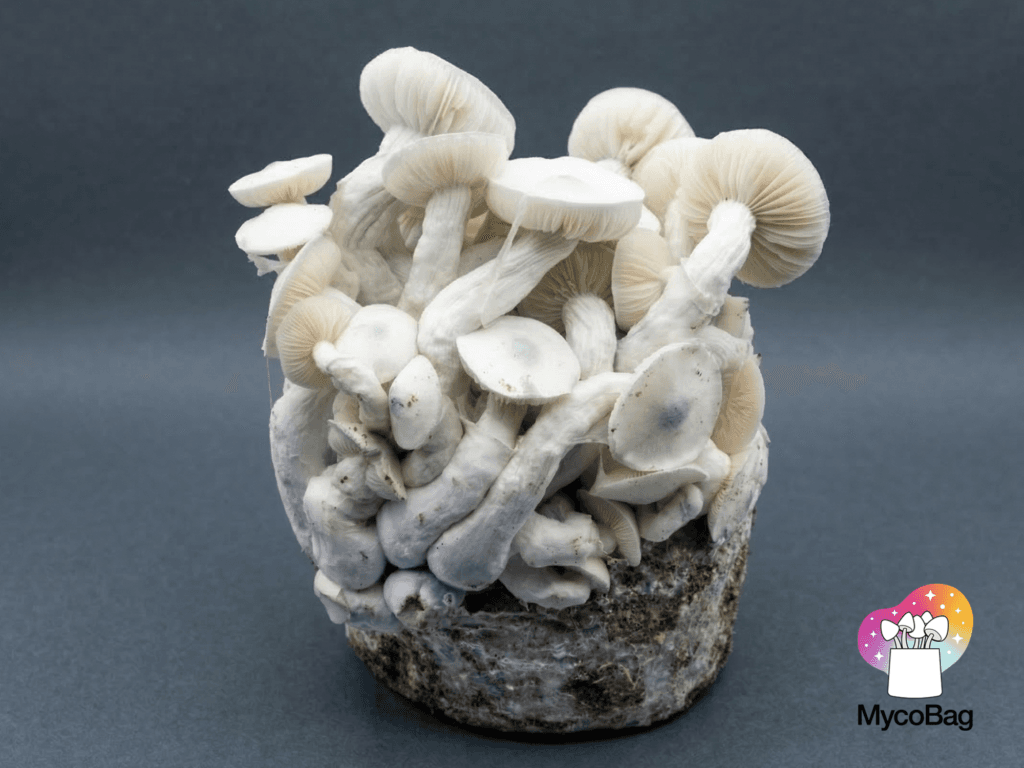
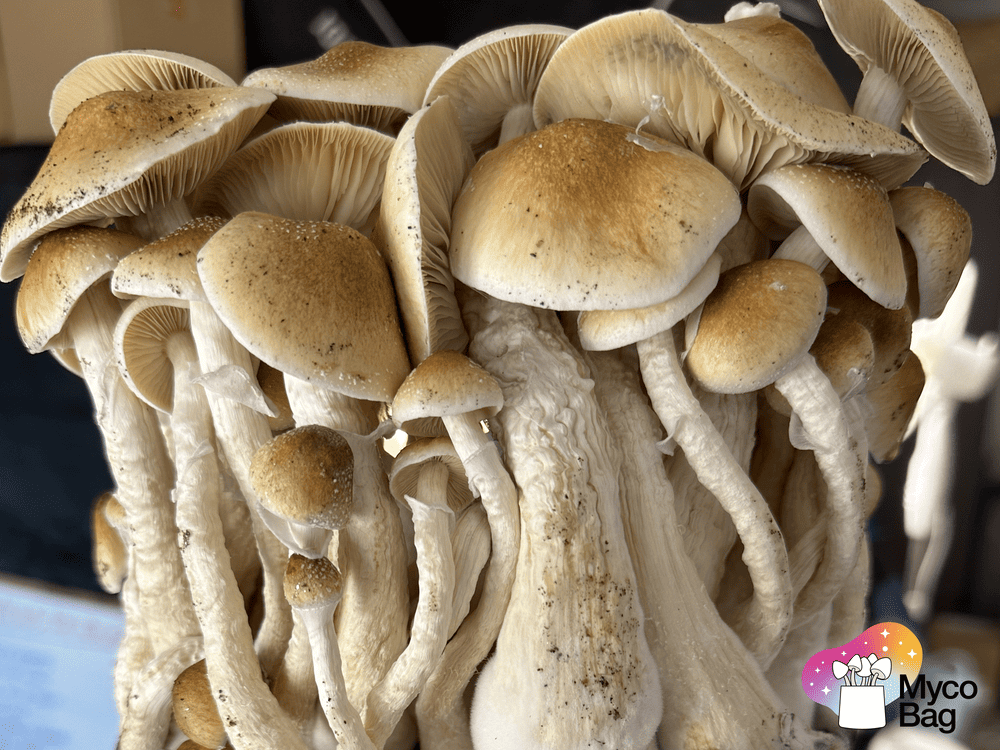
A thick stem, pale phenotype or strong blueing response cannot reliably tell us how much psilocybin, psilocin or other compounds are present in a particular specimen.
Morphology and chemistry are both biological characteristics, but one is not a substitute for the other.
The same principle applies to genetics. A documented lineage provides useful information about provenance and phenotype, but it does not guarantee a fixed chemical profile in every fruiting body.
You can explore that distinction further in our guide to elite mushroom genetics and biological performance.
Why analytical testing matters
If the goal is scientific comparison, appearance alone cannot provide the answer.
Validated analytical methods provide a stronger basis for evaluating psilocybin, psilocin and related compounds than colour, size or assumptions associated with a cultivar name.
This is where MycoTest becomes relevant. Its purpose is to add measurable chemical information to observations that would otherwise remain mainly morphological.
The distinction is important: visual traits can describe a specimen, while analytical data can help characterise its chemical composition.
Frequently asked questions
Does drying completely stop chemical degradation?
No. Reducing moisture can improve the stability of fungal biomass, but chemical compounds may continue to change depending on the sample and its environment.
Does blueing prove high psilocybin content?
No. Blueing is a chemical response in damaged fungal tissue, but colour intensity is not a reliable quantitative measurement of psilocybin or psilocin.
Are fresh and dried samples chemically identical?
Not necessarily. Processing and storage conditions can influence the chemical profile measured during subsequent analysis.
Can a cultivar name predict alkaloid concentration?
No. A cultivar name provides genetic and historical context, but individual chemical measurements can vary and require analytical verification.
From drying advice to post-harvest science
The more useful scientific question is not how to find a supposedly perfect drying recipe. It is how moisture, oxygen, temperature, physical damage and time interact with fungal chemistry after harvest.
Understanding those variables improves the interpretation of research samples and helps separate measurable evidence from assumptions based on appearance or cultivar reputation.
For MycoBag, the priority is documented genetics, controlled comparisons and analytical data rather than promises of “maximum potency”.
This article is intended for scientific and informational purposes and does not provide instructions for the processing or consumption of regulated substances.

 Sale!
Sale! Sale!
Sale!