MycoTest is MycoBag’s laboratory analysis service for mycology research. It quantifies the main tryptamine alkaloids in a dried mushroom sample, so you can replace visual estimates with objective data. In this post we explain what the test measures, how it works, how results are delivered and why quantitative data matters for your research.
What MycoTest measures
Each report includes three values for your sample:
- Psilocybin (4-phosphoryloxy-N,N-dimethyltryptamine), usually the most abundant alkaloid in the fruiting body.
- PCBE (psilocybin + psilocin), the combined content of psilocybin and its dephosphorylated, less stable form, psilocin.
- Total alkaloids, the sum of the tryptamine alkaloids detected in the sample.
MycoTest is a potency analysis. It does not test for contaminants, moulds or other substances.
How the test works
- Order your analysis. Buy MycoTest – Analysis + Bag for €25. You receive a unique code for your sample.
- Label your sample. Write the code on the pre-printed envelope included with your MycoTest Bag. The code links the sample to its report and keeps the process anonymous.
- Prepare your sample. Place the fully dried sample in the MycoTest Bag and seal it to protect it from air, light and physical damage.
- Send it to the laboratory. Post the pre-printed envelope. No address is needed.
- Receive your report. Within 3 weeks you receive the quantitative results by email.
Why quantitative data matters
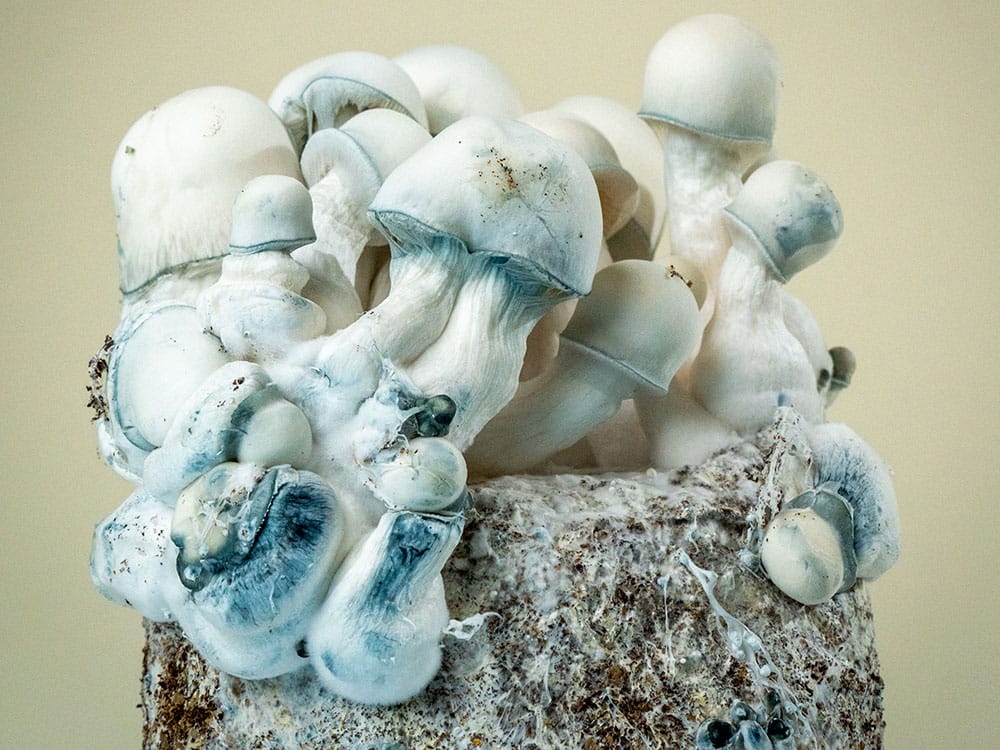
Alkaloid content varies considerably between strains, between flushes and even between fruiting bodies from the same culture. Genetics, cultivation conditions, the developmental stage at harvest and post-harvest handling all play a role. Visual cues such as size, colour or blue bruising cannot tell you how much psilocybin a sample contains. The blue colour, for example, is produced by the oxidation of psilocin and indicates degradation, not potency.
With measured values you can:
- Compare the alkaloid profile of different strains under the same conditions.
- Track how values change from one flush to the next.
- Evaluate the effect of drying and storage methods on alkaloid stability.
- Build a consistent, reproducible record of your mycology research.
Tips for a representative result
Dry the sample completely, avoid high drying temperatures, send it soon after drying and keep it away from light, heat and humidity until you post it. To compare strains or flushes, send each one as a separate MycoTest with its own code.
Conclusion
For €25 per sample, MycoTest gives independent researchers access to laboratory data that is usually expensive and hard to obtain. If you want to understand and compare the alkaloid profile of your samples on an objective basis, it is the simplest way to start.